
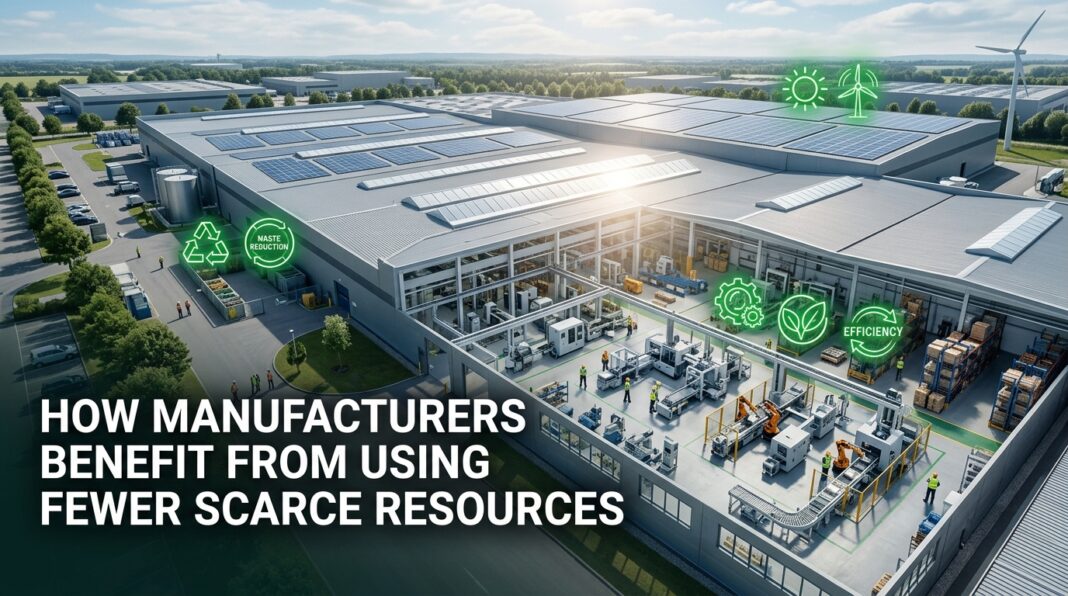

Imagine running a factory where every raw material costs more than it did last year. Suppliers are stretched thin. Shipping is delayed. Prices keep climbing. Sound familiar?
This is the reality for manufacturers today — operating in a world where scarce natural resources are becoming harder and more expensive to access. Whether it’s rare metals, clean water, timber, or fossil fuels, the pressure to produce more with less has never been more real.
But here’s the thing — using fewer scarce resources isn’t just the “responsible” thing to do. It’s one of the smartest business decisions a manufacturer can make.
From dramatically lowering production costs to creating stronger supply chains and positioning a brand as a market leader in sustainability, resource efficiency is transforming how modern manufacturers think, operate, and grow.
This article breaks it all down — simply, practically, and with real-world context — so you can understand exactly how this shift pays off.
What Are Scarce Resources in Manufacturing?
Before diving into the benefits, it helps to understand what “scarce resources” actually means in a manufacturing context.
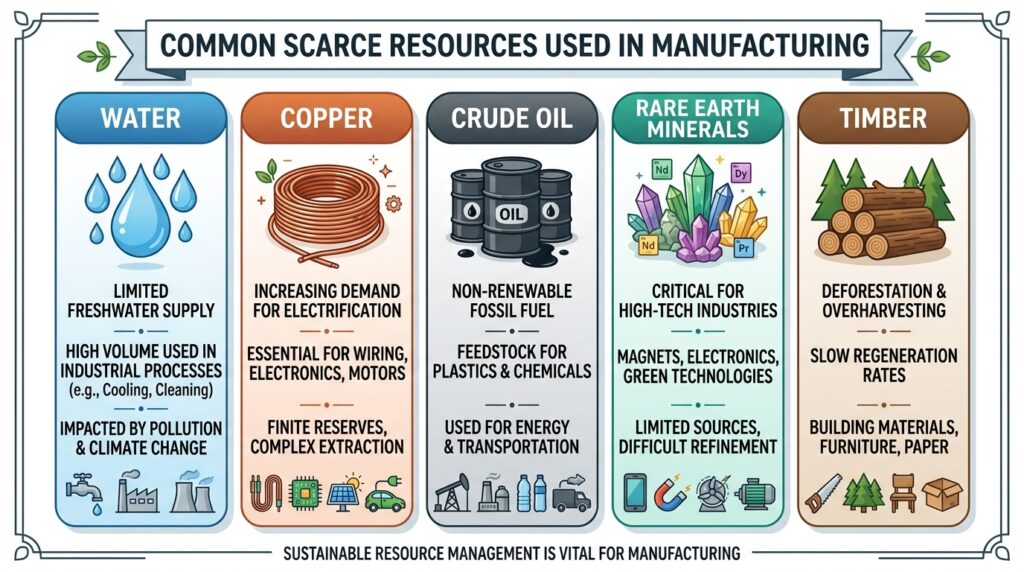
Scarce resources are inputs that are limited in supply, difficult to replenish, or increasingly expensive due to high global demand. In manufacturing, these typically include:
- Raw materials like copper, lithium, cobalt, and rare earth elements
- Energy sources such as oil, natural gas, and coal
- Water used in cooling, cleaning, and processing
- Timber and biomass for packaging and structural applications
- Land for production and agriculture-based inputs
The challenge is that most traditional manufacturing models were built around cheap, abundant access to these inputs. That era is over.
Global demand is rising. Reserves are shrinking. Climate disruptions are making extraction and logistics more unpredictable than ever. Manufacturers who adapt early will have a significant edge over those who don’t.
The Core Benefits of Using Fewer Scarce Resources
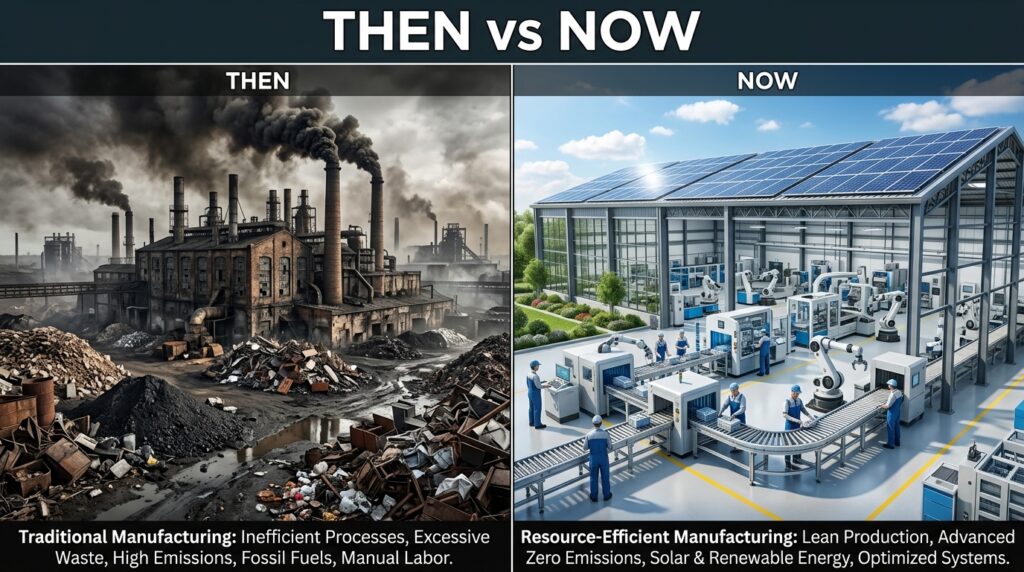
Let’s get into the meat of it. When manufacturers actively reduce their dependency on scarce resources, several powerful benefits follow.
1. Significant Cost Reduction
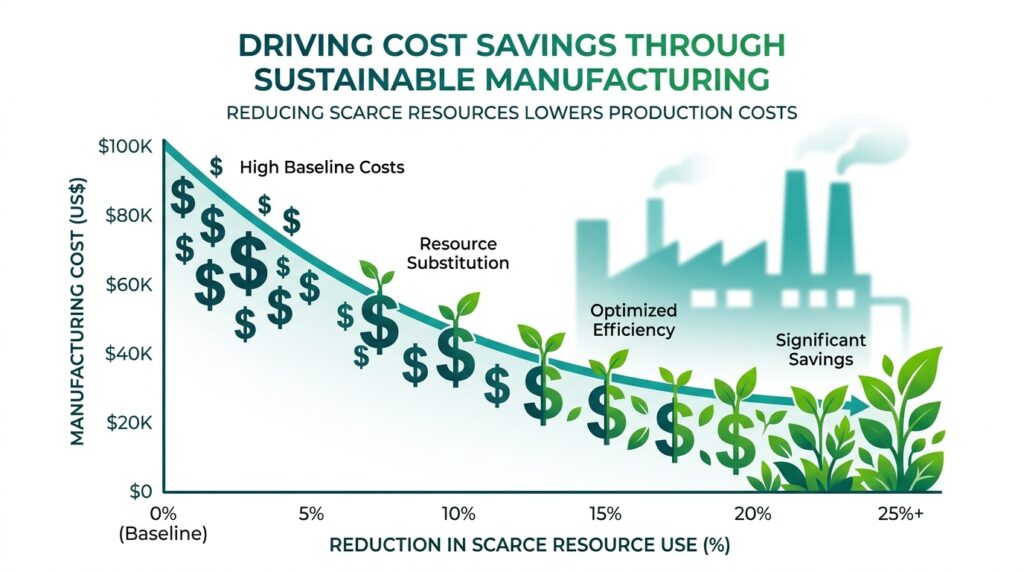
The most immediate and measurable benefit is lower operating costs.
When a manufacturer uses less of an expensive or scarce input — energy, water, rare metals — the per-unit cost of production drops. This isn’t a small savings, either. In many industries, material costs represent 40–70% of total production costs.
Think about it this way: a company that cuts its water usage by 30% through smarter processing doesn’t just save on the water bill. It also reduces the cost of water treatment, equipment maintenance related to water usage, and compliance with environmental regulations.
The same logic applies to energy. Manufacturers that invest in energy-efficient equipment and processes can reduce utility costs significantly — savings that compound over time and go straight to the bottom line.
Key Cost-Saving Areas:
| Resource | Efficiency Strategy | Potential Savings |
|---|---|---|
| Energy | LED lighting, efficient machinery | 20–40% reduction |
| Water | Closed-loop systems, recycling | 25–50% reduction |
| Raw materials | Lean manufacturing, waste audits | 15–30% reduction |
| Packaging | Minimalist design, recycled materials | 10–25% reduction |
These are not marginal gains — they are structural improvements that permanently reshape a manufacturer’s cost profile.
2. Stronger and More Resilient Supply Chains
Here’s something most people overlook: every scarce resource you depend on is a vulnerability.
If your supply chain runs on materials that are geopolitically sensitive — like lithium from politically unstable regions or rare earth elements primarily sourced from a single country — you’re exposed to serious disruption risk. Price spikes, export bans, shipping delays — any of these can halt your production line.
Manufacturers who reduce their reliance on these materials become more self-sufficient and adaptable. They can weather supply shocks that knock competitors offline.
Strategies like circular manufacturing, where materials are recovered and reused internally, mean less dependence on external supply chains altogether.
Less dependency = less risk = more stable operations.
3. Better Regulatory Compliance and Fewer Penalties
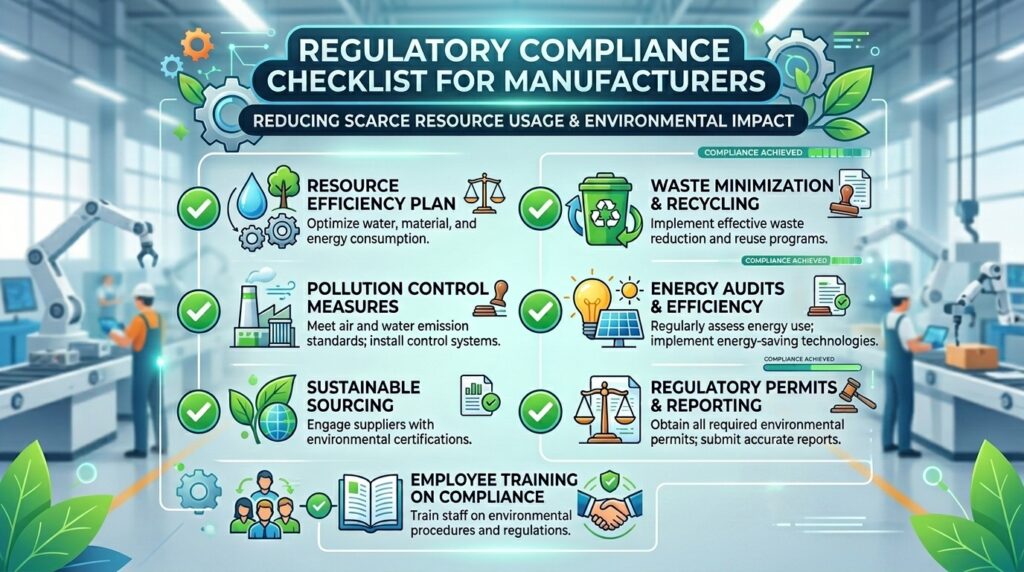
Regulations around resource use, emissions, and waste are tightening — and that trend is not reversing.
Agencies and governments are increasingly enforcing rules around carbon emissions, water usage, chemical discharge, and material sourcing. Non-compliance carries hefty fines, operational shutdowns, and reputational damage.
Manufacturers who proactively reduce their use of scarce and environmentally sensitive resources tend to stay comfortably ahead of regulatory thresholds. They’re not scrambling to catch up when new rules are enacted — they’re already there.
This isn’t just about avoiding penalties. It’s about strategic positioning. Companies that lead on environmental performance often receive preferential treatment in government contracting and procurement opportunities.
4. Improved Brand Reputation and Consumer Trust

Consumers are more informed and more values-driven than ever before. When people buy products, they increasingly want to know where the materials came from and how they were made.
Brands that can credibly claim they use sustainable manufacturing practices — including reduced use of scarce resources — build a powerful layer of consumer trust.
This matters across B2C and B2B contexts. Enterprise buyers, retailers, and even institutional investors are now requiring suppliers to meet environmental standards. If your manufacturing process is resource-efficient, you become a more attractive partner across the board.
The result? More loyal customers, higher brand equity, and stronger pricing power — all flowing from a commitment to using less.
5. Greater Innovation and Competitive Advantage
When you’re forced to do more with less, something interesting happens: you get creative.
Manufacturers that commit to resource reduction often discover entirely new processes, materials, and business models in the process. This is how innovation works in the real world — constraint breeds creativity.
Companies that pioneered lean manufacturing didn’t just save money on materials — they revolutionized their industries. The same principle applies today to resource efficiency.
By developing proprietary processes that use less water, energy, or rare materials, manufacturers create competitive advantages that are genuinely hard to replicate. These innovations can even become new revenue streams — through licensing, consulting, or selling recovered materials to other companies.
6. Long-Term Business Sustainability
Here’s the big picture: natural resource depletion is not a temporary problem. It’s a structural shift in the global economy.
Manufacturers who build their operations around abundant, cheap resources are building on sand. Those who architect their businesses around resource efficiency are building on rock.
The businesses that will still be thriving in twenty years are those that learned — early — to operate lean, innovate continuously, and reduce dependency on inputs they can’t control.
Long-term sustainability isn’t just about the environment. It’s about the viability of the business itself.
Real-World Examples of Resource-Efficient Manufacturing
Let’s ground this in reality with examples of how resource reduction plays out in practice.
The Automotive Sector
The automotive industry has invested heavily in reducing rare material usage — particularly for electric vehicle batteries. Manufacturers are actively redesigning battery chemistry to use less cobalt, a scarce and ethically problematic mineral.
By developing new battery formulas, these companies cut material costs, reduce geopolitical risk, and produce a product that’s more price-competitive in the market. This is resource efficiency working at every level simultaneously.
The Textile Industry
Textile manufacturing is one of the world’s most water-intensive industries. Progressive manufacturers in this space have implemented closed-loop water systems that recycle up to 95% of water used in dyeing and processing.
The result: dramatically lower water bills, reduced wastewater treatment costs, and compliance with increasingly strict environmental standards — all while producing the same quality output.
The Electronics Sector
Electronics manufacturers are mining their own products — literally. By establishing e-waste recovery programs, they recover valuable rare earth elements, copper, gold, and other materials from old devices.
This reduces the need to purchase virgin materials, lowers costs, and creates a circular supply chain that competitors without recovery programs simply can’t match.
Practical Strategies Manufacturers Can Implement Today
If you’re a manufacturer thinking about how to get started, here’s a practical roadmap.
Conduct a Resource Audit
You can’t manage what you don’t measure. Start by conducting a thorough audit of every resource your operation consumes — energy, water, raw materials, packaging, waste outputs.
Resource auditing tools help identify where the biggest inefficiencies are hiding. Often, manufacturers are shocked to find how much waste occurs in areas they’d never thought to examine.
Once you know where the losses are, you can prioritize interventions with the highest return on investment.
Adopt Lean Manufacturing Principles
Lean manufacturing is fundamentally about eliminating waste — and waste is just another word for resource inefficiency.
Lean principles like Just-In-Time production, value stream mapping, and continuous improvement (Kaizen) help manufacturers identify and eliminate every form of waste: overproduction, excess inventory, unnecessary motion, and defects.
The result is a leaner operation that uses exactly what it needs — nothing more.
Invest in Energy-Efficient Technology
Older machinery is often the biggest energy drain in a facility. Upgrading to modern, energy-efficient industrial equipment — including variable frequency drives, high-efficiency motors, and smart building systems — can produce immediate and sustained reductions in energy consumption.
The upfront investment pays back through utility savings, often within two to five years, and continues generating savings indefinitely.
Implement Circular Manufacturing Models
The circular economy model for manufacturing is built on a simple idea: nothing is waste until you decide it is.
By designing products for disassembly, establishing take-back programs, and building systems to recover and reuse materials internally, manufacturers can dramatically reduce their need for virgin resources.
This isn’t idealistic — it’s increasingly economical, especially as raw material prices continue to rise.
Partner With Sustainable Suppliers
Your resource efficiency is only as good as your supply chain. Partnering with suppliers who themselves practice responsible sourcing and efficient resource use means building a supply chain that’s both ethical and resilient.
Certified suppliers — those with ISO 14001, FSC, or similar certifications — give you documented evidence of responsible practices, which increasingly matters to customers, investors, and regulators.
Common Misconceptions About Resource Efficiency in Manufacturing
There are a few persistent myths that keep some manufacturers from taking action. Let’s address them directly.
Myth 1: “Resource efficiency means lower output quality.” Reality: Efficiency is about eliminating waste, not cutting corners. Lean, resource-efficient operations typically produce more consistent quality because they have tighter process control.
Myth 2: “It’s too expensive to make the switch.” Reality: Many resource efficiency investments pay back within two to five years and generate ongoing savings. Additionally, government incentives and grants are often available to offset transition costs.
Myth 3: “Only large manufacturers can afford to do this.” Reality: Many resource efficiency strategies — like waste auditing, lean practices, and smarter procurement — require no capital investment at all. Small and mid-sized manufacturers can start immediately.
Myth 4: “Customers don’t really care about this.” Reality: Sustainability credentials are increasingly influencing purchasing decisions across both consumer and business markets.
Expert Tips for Manufacturers Looking to Reduce Scarce Resource Use
Here are some high-value tips that go beyond the basics:
Tip 1: Start with energy, it pays fastest. Energy reduction initiatives typically have the shortest payback periods. Start there to generate savings that fund other resource efficiency projects.
Tip 2: Track and publish your progress. Manufacturers that publish sustainability metrics — even internal ones — tend to improve faster because the data creates accountability.
Tip 3: Train your team on waste awareness. Resource efficiency is a cultural shift, not just a technical one. Train employees at every level to notice and report waste — they’re often the first to see inefficiencies on the floor.
Tip 4: Use data analytics to spot patterns. Modern manufacturing facilities generate enormous amounts of operational data. Industrial IoT sensors and analytics platforms can reveal hidden inefficiencies in real time that human observers would never catch.
Tip 5: Think in systems, not silos. Resource use doesn’t happen in isolation — energy, water, materials, and waste are all connected. Adopt a systems-thinking approach to see how changes in one area affect others.
The Environmental and Social Impact Beyond the Factory Floor
The benefits of resource efficiency don’t stop at the factory gates.
When manufacturers use fewer scarce resources, they reduce pressure on ecosystems that the entire economy depends on — clean water systems, forests, mineral reserves, and stable climate conditions.
Local communities near factories also benefit directly. Lower emissions, reduced chemical discharge, and less land disturbance from mining and extraction create healthier environments for people who live nearby.
And on a macro level, manufacturers who lead on resource efficiency contribute to economic resilience — by reducing national dependency on imported raw materials and helping build a more self-sufficient industrial base.
The ripple effects of getting this right are profound.
Frequently Asked Questions
How would a manufacturer benefit by using fewer scarce resources in terms of cost?
Using fewer scarce resources directly lowers raw material and energy costs, which often represent the largest portion of a manufacturer’s budget. Less waste also means fewer disposal and compliance costs. Over time, these savings accumulate into significant improvements in profit margins and overall financial health.
Does reducing scarce resource use make manufacturing less competitive?
No — the opposite is true. Manufacturers who reduce their dependence on scarce and volatile resources become more cost-stable, more resilient to supply chain disruptions, and more attractive to sustainability-conscious customers and partners. These are all competitive advantages.
What industries benefit most from resource efficiency in manufacturing?
Every industry benefits, but the gains are especially significant in energy-intensive sectors like steel, chemicals, and automotive; water-intensive industries like textiles and food processing; and technology manufacturing that relies on rare earth minerals and precious metals.
How can a small manufacturer start reducing scarce resource use?
Start with a simple waste audit — track your energy, water, and material consumption for 30 days. Identify the biggest sources of waste, then prioritize fixes with the lowest cost and highest impact. Many lean manufacturing techniques require no capital investment and can be implemented immediately.
Is there government support available for manufacturers adopting resource efficiency practices?
Many programs exist at the federal and state level to support manufacturers in upgrading to energy-efficient equipment, adopting sustainable practices, and reducing emissions. The Department of Energy’s Advanced Manufacturing Office offers resources, tools, and grant information for manufacturers looking to improve efficiency.
Conclusion
Using fewer scarce resources isn’t a sacrifice. It’s a strategy.
Manufacturers who make this shift don’t just help the environment — they build stronger, more profitable, more resilient businesses. They lower their costs, reduce their risk, innovate faster, attract better partners, and position themselves for long-term success in a world where resource scarcity is only going to intensify.
The question isn’t whether manufacturers should reduce their use of scarce resources. The real question is: how fast can they start?
Whether you’re running a large-scale industrial operation or a lean mid-sized factory, the path forward is clear. Audit what you use. Eliminate what you waste. Invest in efficiency. Think in systems. Build a supply chain that can sustain itself.
The manufacturers who get this right today are writing the success stories that will be studied for decades.
Ready to start? Explore lean manufacturing principles, review your current resource consumption, and take that first step toward a more efficient, resilient, and profitable operation.
This article is written for educational and informational purposes. All strategies and recommendations are based on established manufacturing and sustainability principles.