
That high-pitched squeal every time you slow down is one of the most annoying sounds a vehicle can make. Worse, it makes you wonder: Is something seriously wrong?
The good news is that squeaky brakes are a very common problem, and in most cases, you don’t need to rush to a mechanic. Whether you’re dealing with a car, bike, mountain bike, truck, or motorcycle, there are real, simple solutions you can apply — many of them right at home.
This guide walks you through everything you need to know about how to fix squeaky brakes, step by step, without making it complicated.
Why Do Brakes Squeak? Understanding the Root Cause
Before jumping into fixes, it helps to understand why brakes make noise in the first place.
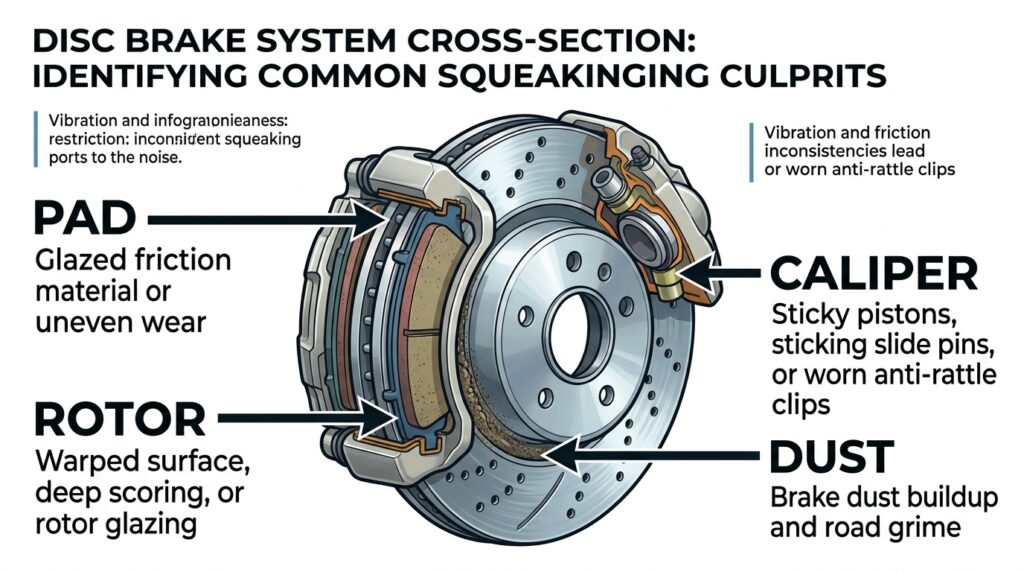
Brakes work by creating friction to slow you down. That friction comes from brake pads pressing against a rotor (or disc). When something disrupts that clean contact — dust, worn pads, moisture, heat, or lack of lubrication — you get noise.
Here are the most common causes:
- Worn brake pads — Most pads have a built-in metal wear indicator that squeals when the pad gets too thin. This is intentional and means it’s time to replace them.
- Dust and debris — A thin layer of brake dust, dirt, or road grime on the rotor causes squealing, especially after the car sits overnight.
- Morning moisture — A light rust film builds on rotors overnight. It usually clears after a few stops and is rarely a concern.
- Glazed pads or rotors — Overheated or hardened pad surfaces lose their grip and squeak badly.
- Lack of lubrication — Certain contact points (not the rotor itself) need brake-safe grease. Without it, metal vibrates against metal.
- Cheap or incompatible pads — Low-quality semi-metallic pads are notorious noise makers.
- Improper brake pad break-in — New brake pads need to be “bedded in” before they perform quietly.
Understanding the cause helps you apply the right fix instead of guessing.
How to Fix Squeaky Brakes on Car
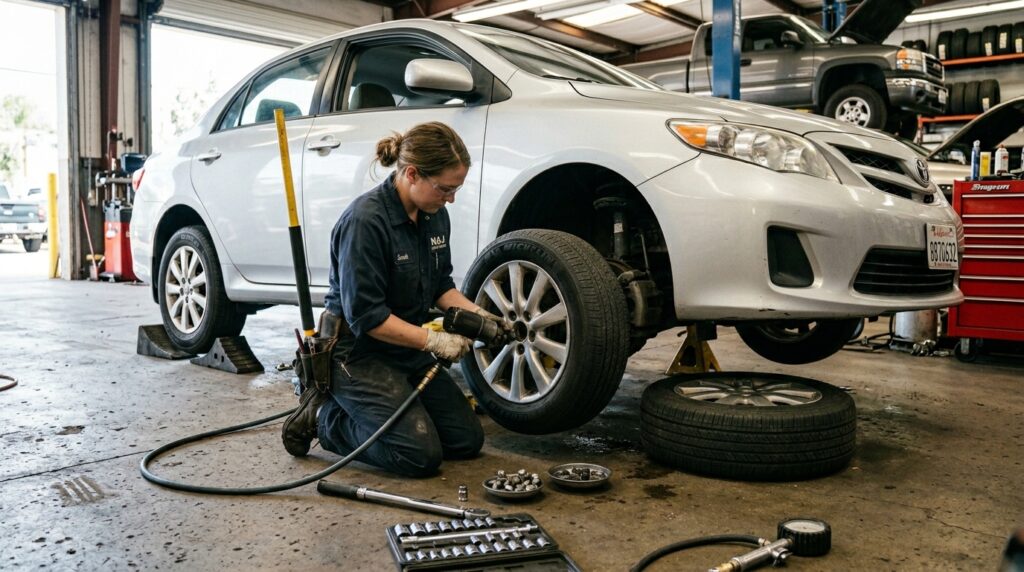
Cars are the most common vehicle people have brake noise complaints about. The fix depends on the cause, but here’s a practical order of operations.
Step 1 — Clean the Brakes First
Sometimes the solution is as simple as cleaning.
Brake cleaner spray removes dust, grease, and light rust from rotors without disassembling anything. Simply spray it on the rotor through the wheel spokes and let it dry.
This alone fixes the problem in a surprising number of cases, especially after sitting idle for a few days.
Step 2 — Check Your Brake Pad Thickness
If cleaning doesn’t help, inspect the pads.
You can often see the pad through the wheel spokes. Look at the thickness of the pad material between the metal backing plate and the rotor. If it’s less than ¼ inch (roughly 3mm), the pads are worn and need replacing.
Worn pads are the number one reason brakes squeal loudly and consistently. Don’t ignore this one — it’s also a safety issue.
Step 3 — Apply Brake Lubricant to the Right Spots
This is where many beginners go wrong. You should never apply grease to the rotor or the pad surface itself.
Lubrication goes on:
- The back side of the brake pad (between the pad and caliper piston)
- Caliper slide pins
- Contact points on the caliper bracket
Use a product specifically labeled as brake caliper grease or brake quiet compound. A thin application on the right spots reduces vibration dramatically.
Step 4 — Install Brake Shims or Anti-Squeal Compound
If you recently changed your pads and they still squeal, the issue is often vibration between the pad and caliper.
Brake shims are thin metal or rubber layers that fit between the pad and caliper. Many new pads come with them pre-attached. If yours didn’t, adding aftermarket shims is a cheap, easy fix.
Anti-squeal spray compound is another option. Spray it on the back of the pad, let it dry, then install normally.
Step 5 — Bed In New Brake Pads Properly
If your brakes are brand new and still squeaking, they just need to be broken in.
This process, called “bedding,” deposits an even layer of pad material onto the rotor surface. To do it:
- Find a safe, empty road
- Accelerate to 30 mph, then brake firmly (not a full emergency stop) down to 5 mph
- Repeat 6–8 times without letting the brakes cool completely between runs
- Let everything cool for 10 minutes without stopping
After this, most new-pad squealing disappears completely.
How to Fix Squeaky Brakes on Bike
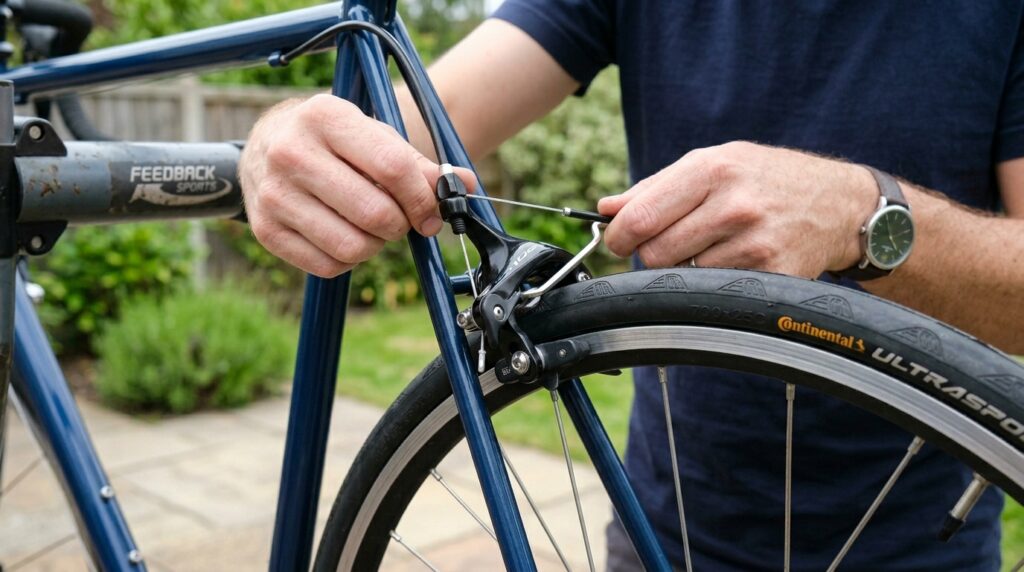
Bicycle brakes come in two main types: rim brakes and disc brakes. Each has its own noise cause and fix.
Rim Brakes
Rim brakes grip the metal rim of your wheel. They squeal most often when:
- The brake pads are misaligned (hitting the rim at the wrong angle)
- The rim is oily or dirty
- The pads are worn flat
Fix for misaligned pads: Loosen the pad bolt slightly and adjust the angle so the front of the pad hits the rim first (this is called “toe-in”). The front edge should contact slightly before the rear when squeezed. Tighten and test.
Fix for dirty rims: Wipe the rim with isopropyl alcohol. Avoid any oil-based cleaners.
Fix for worn pads: Bicycle brake pads are inexpensive and easy to replace. If the pad surface is worn smooth or cracked, swap them out.
Disc Brakes (Hydraulic and Mechanical)
Disc brakes on bikes are more powerful but also more sensitive to contamination.
The most common cause of squealing disc brakes on a bicycle is oil contamination. Even a tiny amount of chain lube or grease on the rotor or pad face will cause persistent squeal.
Fix:
- Clean the rotor with isopropyl alcohol and a clean rag
- If pads are contaminated, the best fix is replacement — contaminated pads rarely clean up fully
- Check that the rotor is centered in the caliper. A rotor rubbing on one side squeals and reduces stopping power
Knowing how to fix squeaky brakes on bike usually comes down to cleanliness and alignment.
How to Fix Squeaky Brakes on Ebike
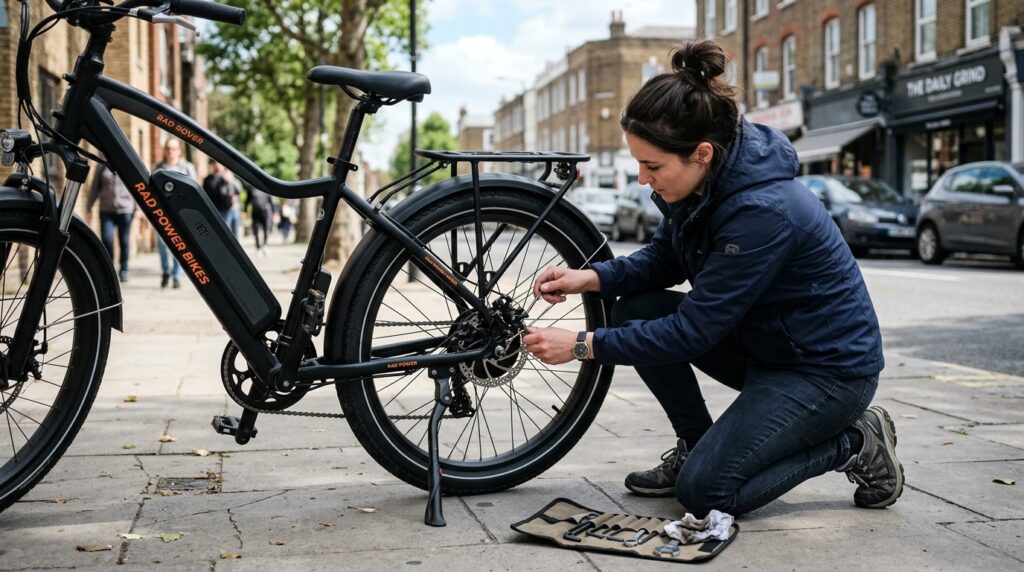
Ebike brakes deal with more heat and speed than regular bikes, so squealing is more common. Most ebikes use hydraulic disc brakes, which are powerful but need more maintenance attention.
Here’s what causes squeaky brakes on an ebike most often:
- Brake-in period — New ebike pads need bedding just like car pads. Do 10–20 moderate stops from 15 mph to nearly zero. Don’t overheat them.
- Contamination from chain oil — Keep lube away from the rotors. Always use a rag to protect the rotor when lubing your chain.
- Caliper misalignment — Loosen the two caliper mounting bolts, squeeze the brake lever to center the caliper, then tighten while holding the lever.
- Heat buildup on long descents — On long downhill rides, drag braking builds heat and glazes pads. Use short, firm stops instead and let brakes cool.
Learning how to fix squeaky brakes on ebike involves the same principles as regular disc bikes but demands more frequent maintenance due to higher speeds and heavier rider loads.
How to Fix Squeaky Brakes on MTB and Mountain Bike

Mountain biking exposes brakes to mud, water, roots, and constant abuse. Squealing is part of the territory — but it doesn’t have to be constant.
Common MTB Brake Noise Causes
- Wet or muddy conditions (temporary, usually self-clears)
- Contaminated pads from trail mud or chain lube
- Glazed pads from sustained braking on long descents
- Rotor warping from heat
- Loose caliper mounting bolts vibrating under trail chatter
MTB Brake Squeal Fixes
For glazed pads: Lightly sand the face of the pad on 120-grit sandpaper in a figure-eight motion. This scuffs up the surface and restores grip. Also sand the rotor lightly and clean with alcohol.
For contaminated pads: Inspect the pad. If it smells like oil or chain lube, replace it. You can try burning off contamination by dragging the brake against the rotor briefly, but this only works for minor contamination.
For a warped rotor: Lay it flat on a surface to check. Small bends can be bent back with a rotor truing tool or gentle pressure. Severely warped rotors should be replaced.
Knowing how to fix squeaky brakes on MTB and how to fix squeaky brakes on mountain bike often comes down to two things: keeping the braking surfaces clean and replacing parts before they get too worn down.
How to Fix Squeaky Brakes at Home (Without a Mechanic)
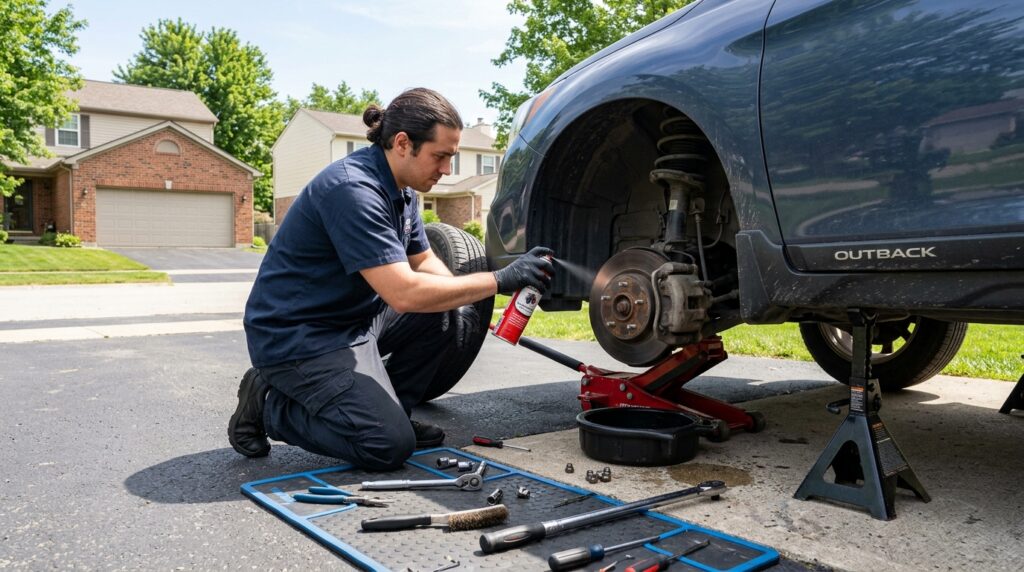
Many brake squeal fixes don’t require a lift, a shop, or professional tools. You can handle them in your own driveway with basic supplies.
Here’s what you can realistically fix at home:
| Problem | At-Home Fix | Difficulty |
|---|---|---|
| Dust on rotors | Brake cleaner spray | Very Easy |
| Morning rust squealing | Drive normally, clears itself | None |
| Unlubricated contact points | Caliper grease on slide pins | Easy |
| New pad break-in noise | Bedding procedure on open road | Easy |
| Glazed pads | Light sanding or pad replacement | Moderate |
| Worn pads | Pad replacement | Moderate |
What you’ll need for a basic at-home fix:
- Brake cleaner spray
- Brake caliper grease (not regular grease)
- Jack and jack stands
- Lug wrench
- Basic socket set
For replacing pads yourself, a good resource is the DIY brake pad replacement guide that walks through the full process.
Learning how to fix squeaky brakes at home saves money and builds real mechanical confidence.
How to Fix Squeaky Brakes on a Truck
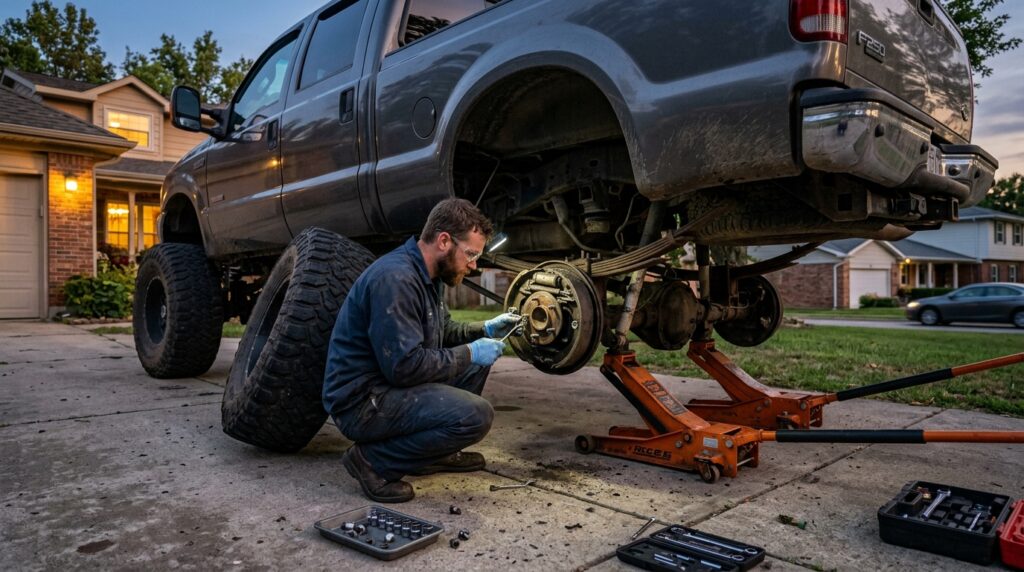
Trucks often use drum brakes in the rear instead of disc brakes, which changes the fix approach. The front brakes are typically disc.
Rear Drum Brake Squeal on Trucks
Drum brakes squeal when:
- Brake shoes wear down and the metal scrapes
- The drum interior is coated with glaze from heat
- Dust and debris pack inside the drum
- The brake hardware (springs and clips) corrodes
Fix: Remove the drum (usually done after removing the wheel), clean the interior with brake cleaner, inspect the shoes for wear, and apply a thin bead of high-temperature brake grease on the shoe contact points (not the friction surface).
If the shoes are near the wear limit (usually marked by a line on the shoe material), replace them. Drum brake shoe kits are affordable and come with all the hardware.
Front Disc Brake Squeal on Trucks
Follow the same steps as the car disc brake section. The only difference is trucks have heavier rotors and pads due to the vehicle weight.
For towing trucks especially, choose ceramic brake pads designed for higher heat loads. Semi-metallic pads are noisy under heavy load conditions.
Knowing how to fix squeaky brakes on a truck means understanding both drum and disc systems. Rear drum noise is the most commonly overlooked cause in truck owners.
How to Fix Squeaky Brakes Without Removing the Wheel
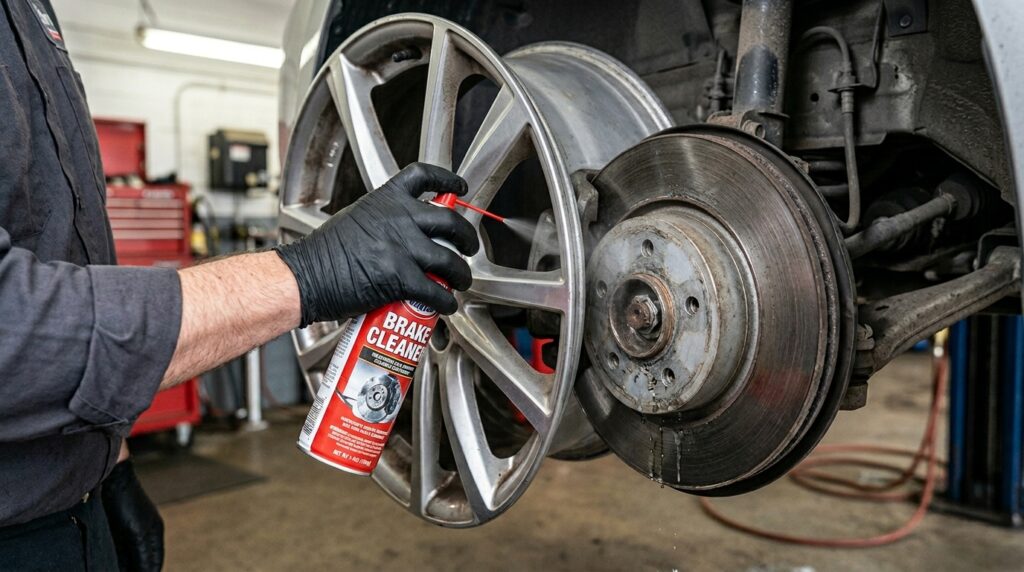
Not ready to break out the jack stands? There are a few things you can do without pulling the wheel off at all.
Option 1: Brake Cleaner Spray Spray brake parts cleaner directly through the wheel spokes onto the rotor. It evaporates quickly and removes dust, grime, and light oil. This works best for situational or morning squeal.
Option 2: Drive to Heat Up the Brakes Slowly accelerating and braking firmly several times can burn off light surface rust on rotors. It’s not a cure-all but can reduce mild squealing significantly.
Option 3: Adjust Driving Habits Avoid riding the brake pedal and use firm, deliberate stops instead of light constant pressure. Light braking glazes pads over time.
Option 4: Anti-Squeal Spray on Pad Back Some products are designed to be sprayed between the pad and piston through the caliper gap without full disassembly. Results vary, but it’s worth trying for minor noise.
These are your best options for how to fix squeaky brakes without removing the wheel. For persistent squealing, though, full inspection is the only real answer.
How to Fix Squeaky Brakes That Are New
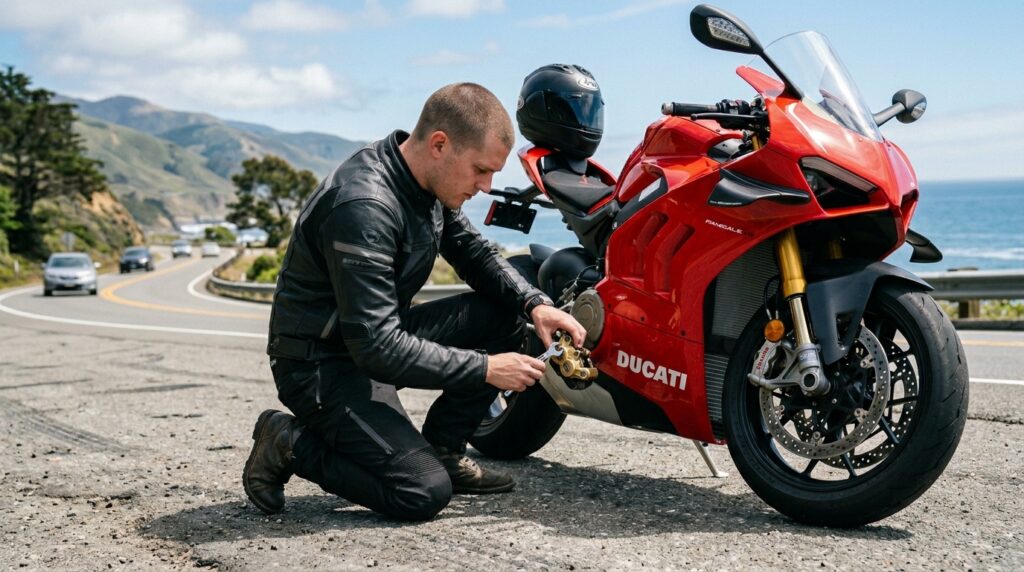
New brakes squealing is one of the most common complaints brake shops hear. You just paid for fresh pads and now they’re loud — what gives?
New brakes squeak for a few reasons:
- Pad material type — Semi-metallic pads squeal more than ceramic pads, especially when cold.
- No anti-squeal shims — Budget brake pads often skip the shims. Add aftermarket shims.
- No bedding procedure — Fresh pads haven’t deposited an even layer on the rotor yet.
- Anti-rust coating on rotor — New rotors have a protective coating that must wear off in the first few miles.
- Wrong pad for the application — Not all pads work with all vehicles. Match the pad to the OEM spec.
The fastest fix for new brake squeal:
Do the bedding procedure (detailed in the car section above). This resolves new-pad squeal in most cases. Give it 300–500 miles and most noise disappears as the pads seat in.
If they’re still loud after bedding, apply CRC Disc Brake Quiet or similar anti-squeal compound to the non-friction surface of the pads.
Knowing how to fix squeaky brakes that are new is mostly about patience and proper installation.
How to Fix Squeaky Brakes on Motorcycle
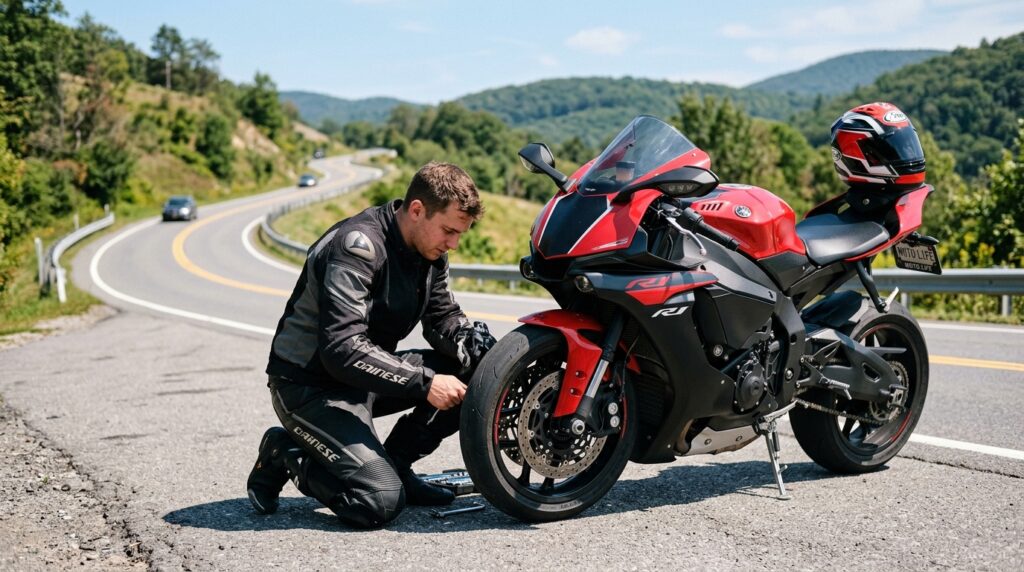
Motorcycle brakes follow the same disc brake principles as cars and bikes, but with a few extra considerations.
Common causes of squeaky motorcycle brakes:
- Glazed pads from highway riding or trail braking
- Contamination from chain oil spray
- Worn pads (many bikes don’t have wear indicators)
- Cold pad material in the morning before warm-up
Motorcycle Brake Fix Steps
Step 1: Clean the rotor with isopropyl alcohol or brake cleaner. Many motorcycle-specific rotor cleaners are available and safe for the seals.
Step 2: Check pad thickness. Remove the caliper (usually two bolts) and slide out the pads. If they’re below 2mm, replace them.
Step 3: Lubricate caliper pins with silicone grease. Do not use petroleum-based grease — it can damage rubber seals.
Step 4: Bed in new pads just like a car. Five or six firm stops from 40 mph down to 10 mph (without overheating) seats new motorcycle pads perfectly.
For hydraulic systems, also check that the brake fluid isn’t old or moisture-contaminated — degraded fluid affects modulation and can cause unusual noise.
Knowing how to fix squeaky brakes on motorcycle is mostly about clean rotors and properly seated pads. Contamination is the top culprit on bikes due to chain lube being so close to the rear rotor.
Expert Tips to Prevent Brake Squealing
Prevention is much easier than fixing the problem after it starts.
Top expert tips:
- Choose ceramic pads over semi-metallic when possible. They run quieter and produce less dust. Ceramic vs semi-metallic brakes is a well-documented comparison if you want to dig deeper.
- Never let pads wear below the minimum. Once the metal wear indicator contacts the rotor, you’re past the warning stage.
- Bed in every set of new pads regardless of what the package says.
- Keep chain lube off the rotors on bikes and motorcycles. Use a rag shield when lubing.
- Don’t park with the brake on (especially bikes) — sustained contact can cause a flat spot on the pad.
- Inspect brakes every 6 months or roughly every 12,000 miles for cars. Catching wear early prevents squealing and saves money.
- Avoid light, constant brake pressure at highway speeds. This overheats and glazes pads faster than firm, occasional stops.
Brake Squeal Diagnosis Chart — Quick Reference
| Noise | When It Happens | Likely Cause | Fix |
|---|---|---|---|
| High-pitched squeal | Cold, first few stops | Morning moisture on rotor | Normal — clears itself |
| Constant squeal while braking | Every stop | Worn pad indicator | Replace pads immediately |
| Squeal + vibration | During braking | Glazed pads or rotor | Sand or replace pads, check rotor |
| Squeal on new brakes | First week | Pads not bedded in | Do bedding procedure |
| Squeal on bike disc brakes | All the time | Contaminated pads | Replace pads, clean rotor |
| Grinding sound | Every stop | Metal-on-metal, pad gone | Stop driving, replace immediately |
FAQs About Fixing Squeaky Brakes
Is it safe to drive with squeaky brakes?
It depends on the cause. Light morning squealing that goes away after a few stops is completely normal. But if the squeal is constant during every stop, especially if accompanied by a grinding feeling, pull over and get an inspection. A worn brake pad that’s metal-on-metal can destroy a rotor in hours of driving and dramatically increase stopping distance.
How much does it cost to fix squeaky brakes professionally?
A basic brake pad replacement typically runs $150–$300 per axle at a shop, depending on the vehicle and labor rates in your area. Rotor replacement adds $200–$400 more. Doing it yourself cuts the cost to $40–$80 in parts for most standard vehicles.
Can WD-40 fix squeaky brakes?
No. Never use WD-40 on brake components. It’s petroleum-based and will contaminate your brake pads and reduce stopping power immediately. Use only brake-specific products — brake cleaner for cleaning, and brake caliper grease for lubrication.
Why do my brakes squeak only when reversing?
Reverse brake squeal is very common and usually harmless. It’s caused by the brake pad abutment clip vibrating in reverse — a direction the brake system isn’t designed to work under load. Applying anti-squeal compound to the back of the pads usually fixes it.
How long does it take for new brake pads to stop squeaking?
Most new pads stop squealing within 300–500 miles of normal driving, or immediately after a proper bedding procedure. If they’re still loud after 600+ miles, check for missing shims, pad material type, or installation errors.
Conclusion: Quiet Brakes Are Within Reach
Squeaky brakes sound scarier than they usually are. In most cases, the fix is as simple as a can of brake cleaner, a proper bedding procedure, or a tube of caliper grease applied in the right place.
Whether you’re figuring out how to fix squeaky brakes on car, bike, mountain bike, ebike, truck, or motorcycle — the fundamentals are the same: clean surfaces, correct lubrication, proper installation, and replacing worn parts before they cause bigger problems.
The biggest mistake people make is ignoring the noise and hoping it goes away. Sometimes it does. But when it doesn’t, that small squeal turns into a grind, and the grind turns into a rotor replacement that costs three times as much as the pads would have.
Take 30 minutes this weekend, inspect your brakes, apply what you learned here, and enjoy a quieter, safer ride.
Have questions about your specific brake setup? Drop them in the comments below — we read every one.