
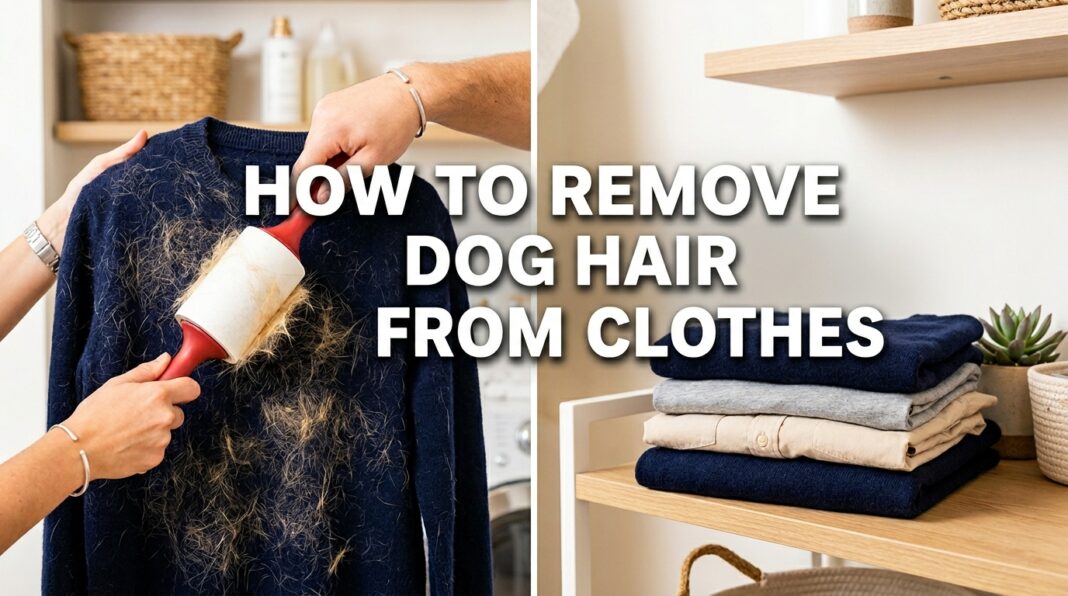

You grab your favorite black hoodie off the chair, throw it on, and then catch yourself in the mirror — covered in dog hair. Again.
If you share your home with a dog, this is basically a daily ritual. And while you love your pup more than anything, walking out of the house looking like a furry creature yourself? Not exactly the look you’re going for.
The good news: removing pet hair from clothes doesn’t have to be a battle. With the right tools and a few smart habits, you can get your clothes completely fur-free in minutes — and even prevent the problem before it starts.
This guide walks you through every reliable method, from what you probably already have at home to a few clever tricks you’ve likely never tried. Let’s get into it.
Why Dog Hair Sticks to Clothes So Stubbornly
Before jumping into solutions, it helps to understand why this happens so much.
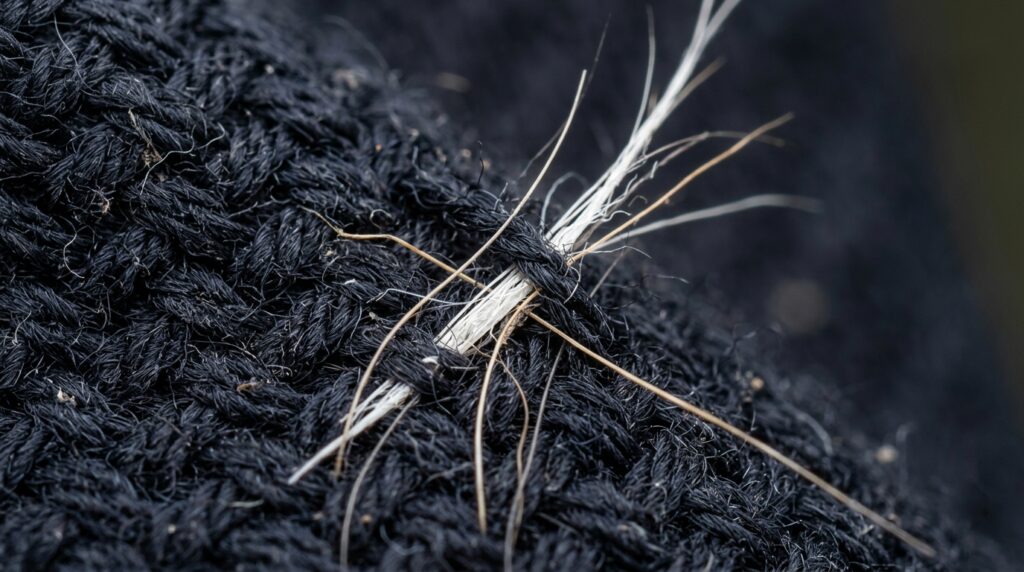
Dog hair clings to fabric for a few reasons. Static electricity is the biggest culprit — especially with synthetic fabrics like polyester and nylon. The fibers in your clothes and the fur create an electrical charge when they rub together, and that charge holds the hair in place like a magnet.
Beyond static, certain dog breeds shed more heavily than others — double-coated breeds like German Shepherds, Huskies, and Golden Retrievers produce fine, dense undercoat fur that wedges deep into fabric weaves.
Darker clothing and tightly woven fabrics like wool and fleece show and trap hair the most. Knowing this helps you make smarter laundry choices down the line.
How to Remove Dog Hair from Clothes Before Washing
The best time to tackle dog hair is before you toss clothes in the wash. Washing clothes with a lot of fur on them can actually push the hair deeper into the fabric — and clog your washing machine lint trap over time.
Here are the most effective dry methods:
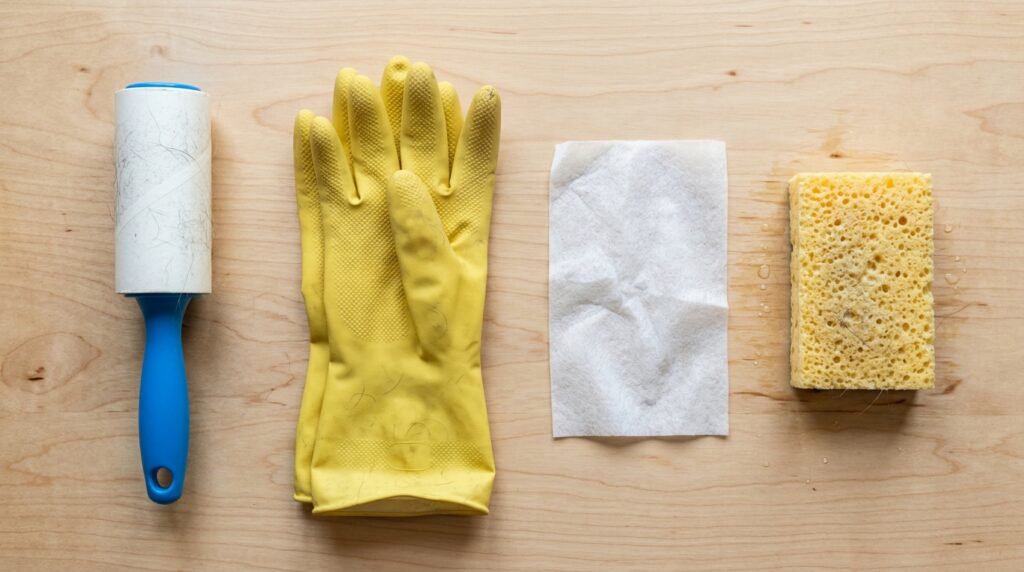
1. Use a Lint Roller
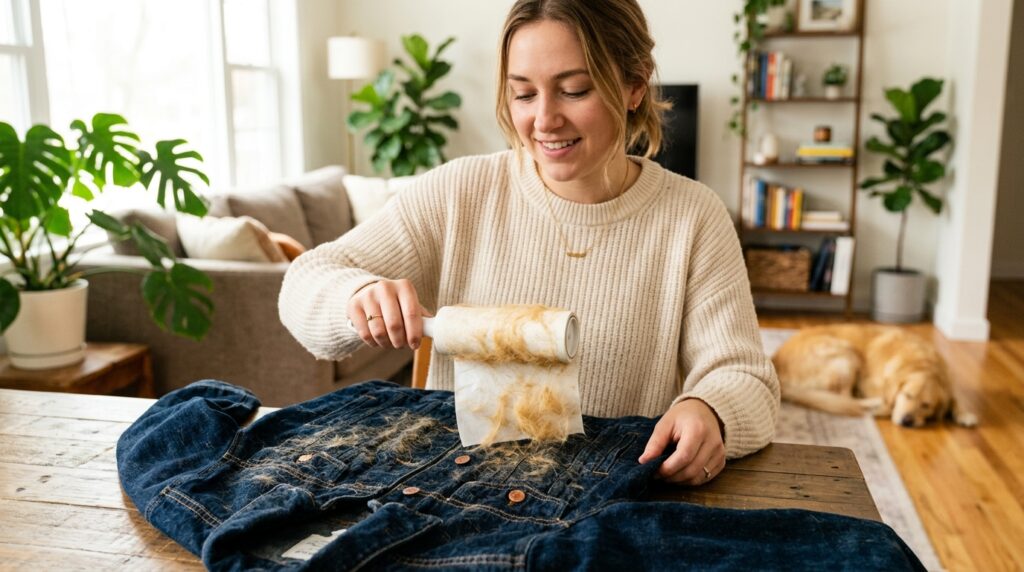
A lint roller is the go-to solution for most people — and for good reason. It’s fast, portable, and genuinely effective.
Roll it firmly over the surface of your clothing in short, overlapping strokes. Work in one direction rather than back and forth, which can redistribute the fur rather than lifting it.
Tips for better results:
- Use slow, steady pressure — not fast scrubbing
- Peel off a sheet as soon as it fills up for maximum stickiness
- Keep one in your car, your bag, and by the front door
For heavy shedders, reusable lint rollers with washable sheets are worth the investment — they last longer and work just as well.
2. Rubber Gloves or a Damp Rubber Sponge
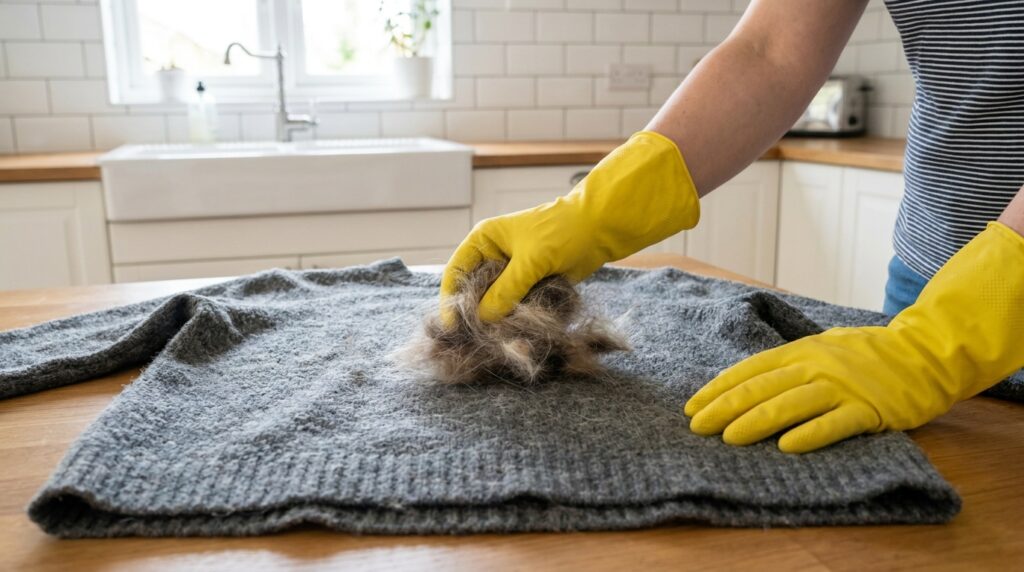
This is one of the best-kept secrets for removing dog hair from clothes — and you probably have what you need in your kitchen right now.
Put on a pair of rubber dishwashing gloves and rub your hands firmly over the fabric. The rubber creates friction that grabs onto pet hair and bunches it into easy-to-remove clumps.
Alternatively, dampen a rubber sponge (like a kitchen sponge or a specialized pet hair removal sponge) and wipe it across the fabric in long strokes. The hair will clump together and lift right off.
This method works especially well on:
- Wool sweaters
- Fleece jackets
- Thick cotton fabrics
3. Packing Tape or Duct Tape
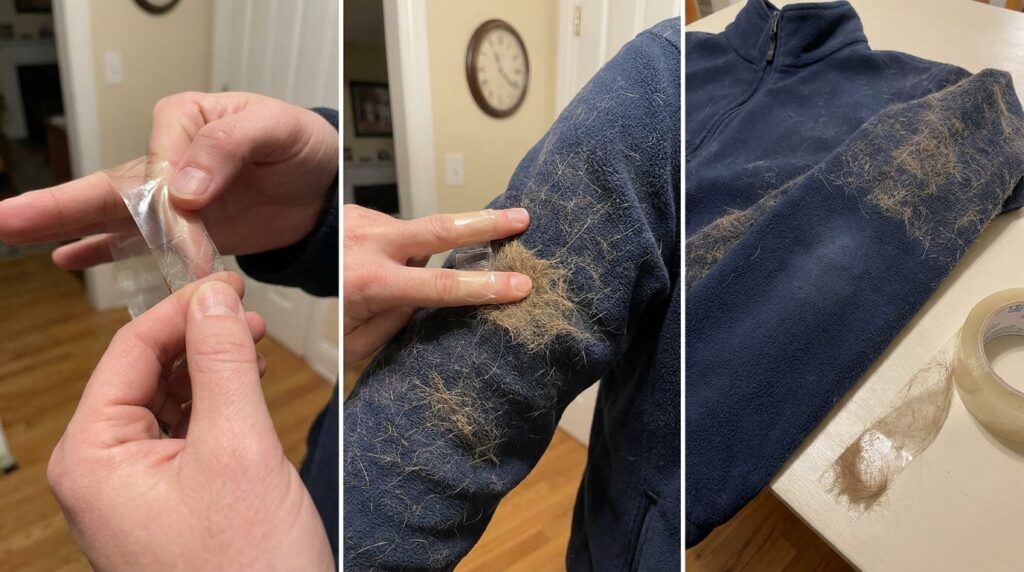
No lint roller? No problem. Wrap a piece of packing tape around your hand sticky-side-out and press it against your clothing in firm, deliberate pats.
Duct tape works even better for stubborn or heavy fur, since it’s stickier than regular tape.
This isn’t as precise as a lint roller, but it works in a pinch and you can get into corners and seams that rollers sometimes miss.
4. Dryer Sheets (Dry Method)
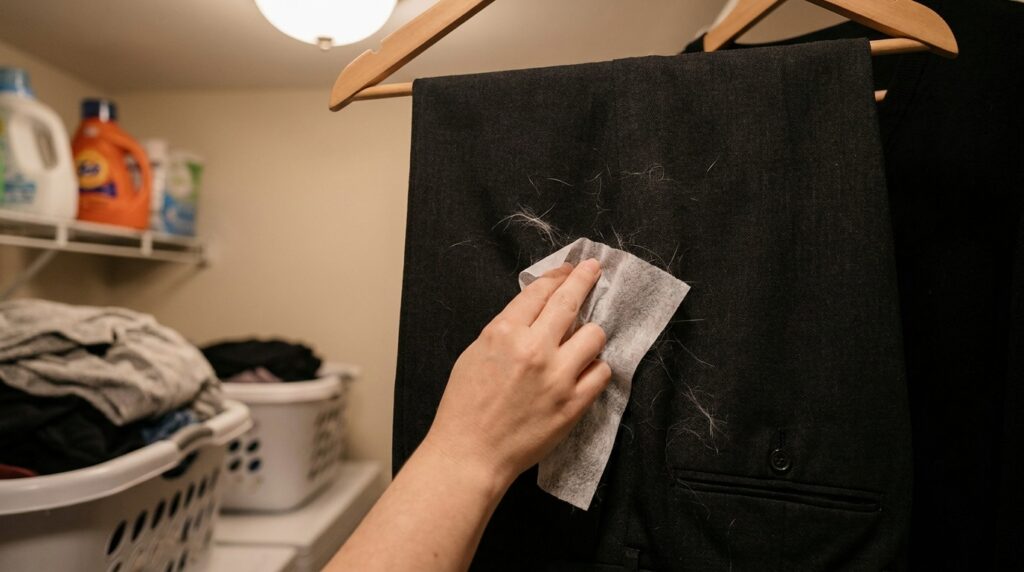
A fresh dryer sheet rubbed across clothing works surprisingly well for light fur coverage. The antistatic properties neutralize the charge that holds hair to fabric, making it slide off more easily.
This also leaves your clothes smelling fresh — a bonus if your dog has that distinct “doggy” scent that transfers to your outfits.
5. A Soft-Bristle Brush or Pet Grooming Brush
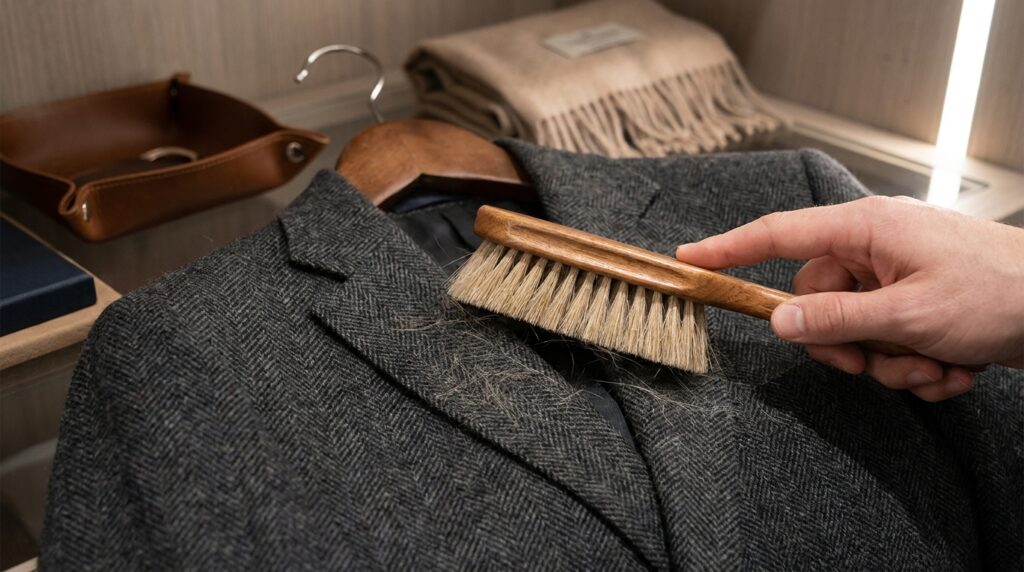
A quality clothes brush with natural bristles can do an excellent job of lifting dog hair from tailored garments — especially when you’re dealing with a blazer, coat, or dress pants you don’t want to run tape across.
Brush in firm, downward strokes to gather the fur. Then use a lint roller for any remaining hair.
Some people also use a rubber pet slicker brush directly on clothing — the same kind used to groom dogs — and it works remarkably well.
How to Remove Dog Hair from Clothes in the Washer and Dryer
Sometimes clothes need a full wash anyway. Here’s how to handle pet hair during laundry so you don’t just move it around — or block up your machine.
Step 1: Pre-treat Before Loading
Shake your clothes out vigorously outside before putting them in the washer. This knocks off the loose fur so it doesn’t all end up in your drum.
If the garment is heavily covered, use a lint roller or rubber glove method first, then wash.
Step 2: Add White Vinegar to the Rinse Cycle
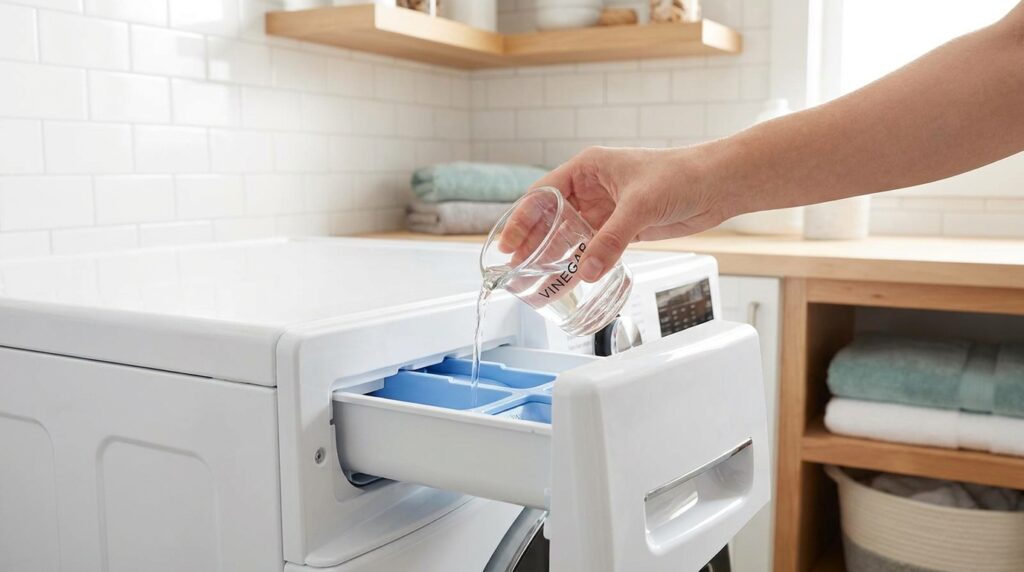
Adding about half a cup of white distilled vinegar to your rinse cycle helps relax the fabric fibers, which loosens hair and allows it to shed more easily during the wash.
It also acts as a natural fabric softener and helps reduce static — the main reason dog hair clings in the first place.
Don’t worry about the smell — it completely rinses out.
Step 3: Use a Laundry Bag for Heavily Furred Items
Placing heavily furred items in a mesh laundry bag before washing helps contain the shed fur and prevent it from spreading to other garments in the drum.
Step 4: Clean Your Lint Trap Before Drying
This is a step most people skip — but it matters. A clogged dryer lint trap makes the drying less efficient and can cause fur to redeposit on your clothes.
Clean your lint trap before every pet-hair-heavy load.
Step 5: Use the Dryer BEFORE Washing
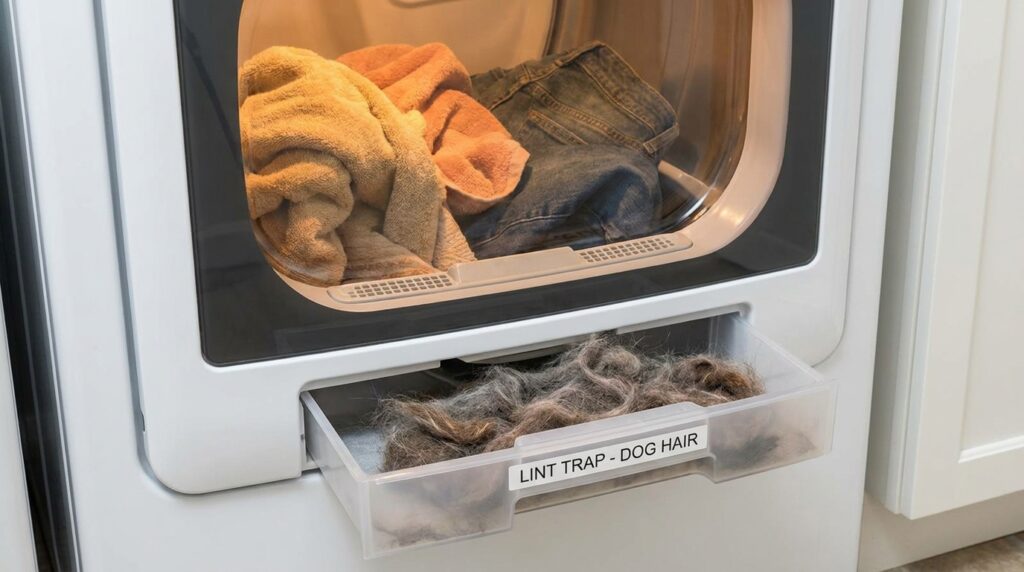
Here’s a trick that surprises a lot of people: run your clothes in the dryer for 10 minutes on low heat BEFORE you wash them.
The tumbling motion loosens the hair from the fabric, and the heat reduces static. The fur ends up in the lint trap — not in your wash. This pre-drying method is one of the most effective ways to handle heavily furred clothing.
After the dryer cycle, shake out your clothes and then proceed with the wash as normal.
Best Products for Removing Dog Hair from Clothes

| Product Type | Best For | Reusable? |
|---|---|---|
| Lint Roller | Quick, everyday use | No (standard) / Yes (reusable) |
| Rubber Pet Hair Remover | Fleece, wool, upholstery | Yes |
| Fabric Shaver/Defuzzer | Pilling + fur combined | Yes |
| Anti-Static Spray | Prevention + light fur | Yes |
| Pet Hair Removal Gloves | Multi-surface use | Yes |
| Dryer Balls | Laundry cycle fur removal | Yes |
Worth mentioning:
- Dryer balls (wool or rubber) added to the drying cycle help separate clothing and reduce static, which dramatically cuts down on the amount of hair that clings after drying.
- Fabric shavers are great if you’re dealing with a sweater that has pilling and pet hair — they handle both at once.
- Anti-static sprays used before wearing can prevent hair from sticking in the first place.
How to Get Dog Hair Off Different Types of Fabric
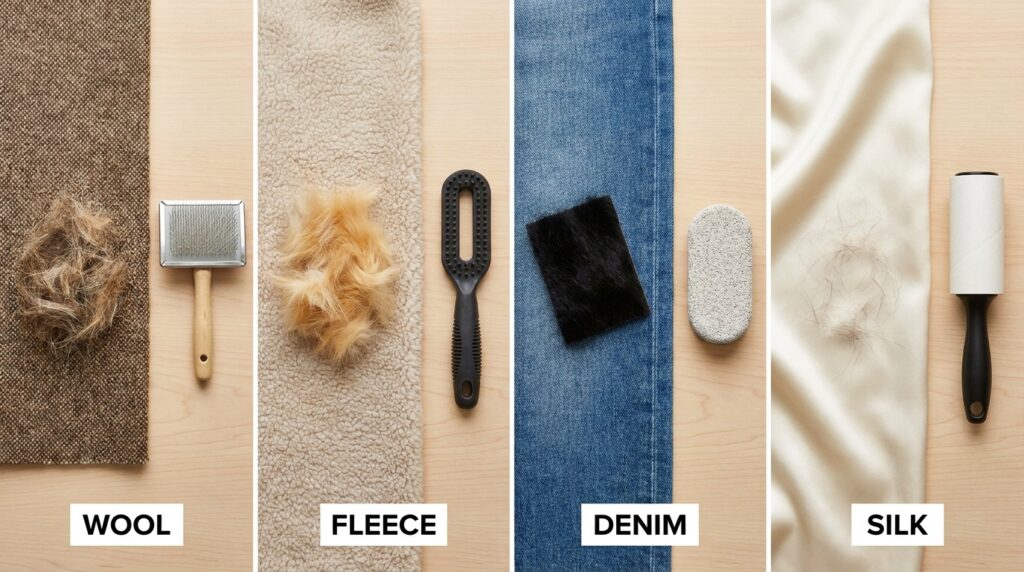
Not all fabrics are created equal when it comes to pet hair. Here’s what works best for each common material:
Removing Dog Hair from Wool and Sweaters
Wool is a notorious fur magnet. The tiny scales on wool fibers interlock with pet hair and hold it tight.
Best methods:
- Rubber gloves (wet or dry) — works exceptionally well
- Fabric comb or sweater stone
- Lint roller with firm pressure
- Soak in cold water with a drop of fabric softener, then air dry (loosens hair naturally)
Avoid hot water and machine drying with wool — always check care labels first.
Removing Dog Hair from Fleece
Fleece is the ultimate fur trap. The textured surface grabs and holds hair like velcro.
Best methods:
- Rubber pet hair remover paddle (most effective)
- Dryer on low heat with dryer balls before washing
- Fabric shaver to remove pilling that traps fur
Removing Dog Hair from Dark Clothing (Black, Navy)
Dark clothes show fur the most, which is why this is such a common frustration.
Best methods:
- High-quality lint roller with strong adhesive
- Anti-static spray before wearing
- Store dark clothing in a sealed garment bag when not in use
- Dry clean only items can be freshened with a dryer on air-only/no heat setting
Removing Dog Hair from Dress Shirts and Dress Pants
For work attire, use a natural bristle clothes brush — it’s gentler and more precise than tape. Follow with a light pass of a lint roller.
Keep a portable lint roller at your desk for mid-day touch-ups if you have a dog that greets you at the door every morning.
How to Prevent Dog Hair from Getting on Clothes in the First Place
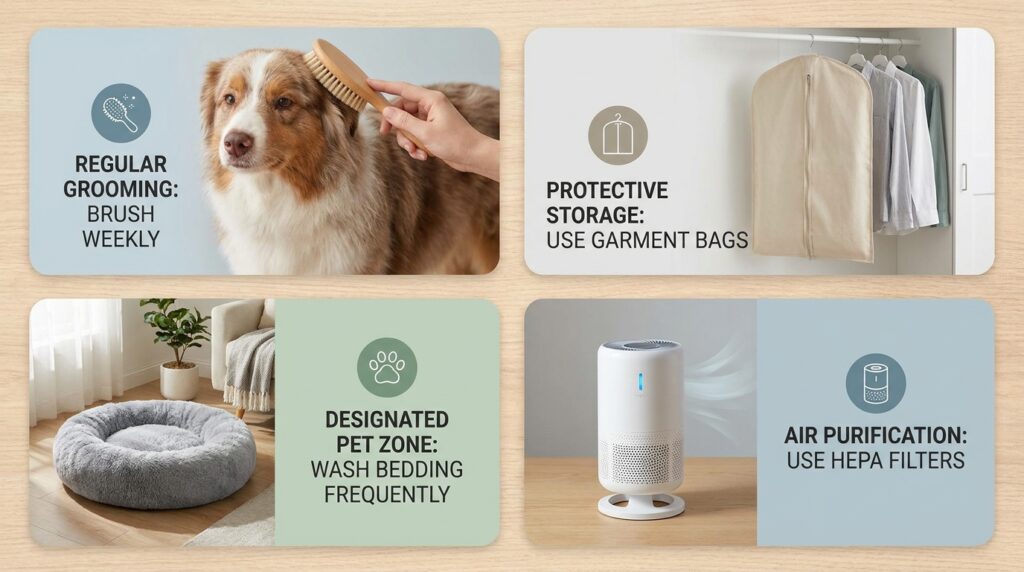
Prevention is always easier than cleanup. A few smart habits can dramatically reduce how much fur ends up on your wardrobe.
1. Brush your dog regularly
Regular grooming removes loose fur before it has a chance to land on your furniture and clothes. For heavy shedders, brush daily during shedding season. A deshedding tool like a Furminator can reduce shedding by up to 90% for some breeds.
2. Use garment bags for your best clothing
Store your nicest clothes — especially suits, blazers, and dress pants — in breathable garment bags. This keeps them fur-free until you actually wear them.
3. Designate dog-free zones
If you can keep your dog off the bedroom and out of the closet area, your clothes will stay cleaner. Use a baby gate or simply keep the bedroom door closed.
4. Wash dog bedding weekly
Dog beds and blankets collect enormous amounts of fur. Washing them weekly (with vinegar in the rinse cycle) prevents the fur from spreading to nearby furniture and clothing.
5. Use an air purifier
An air purifier with a HEPA filter captures airborne pet dander and loose hair before it settles on surfaces — including your clothes laid on the bed or chair.
6. Anti-static laundry products
Use fabric softener or anti-static dryer sheets in every load. Reducing static means less fur sticking during daily wear.
Expert Tips for Dog Hair on Clothes
A few pro-level insights that go beyond the basics:
- Always work in one direction when using a lint roller, brush, or tape — back-and-forth motion pushes hair deeper into fibers.
- Chill your clothes in the freezer for 20–30 minutes before using a lint roller. Cold temperatures cause fabric fibers to contract slightly, releasing their grip on fur — making it easier to lift off.
- Use a balloon (blown up and rubbed on the fabric) to generate static in reverse — attracting loose fur to the balloon and off your clothing. An unusual trick, but it works.
- Rinse rubber gloves under running water every few swipes. This releases the clumped fur and refreshes the grip.
- Upgrade your washer filter — many high-efficiency washing machines have poor lint filtration. Consider adding an external lint catcher to your drain hose to catch fur before it exits the machine.
Common Mistakes to Avoid
Knowing what not to do saves you time and prevents you from damaging your clothes:
- Don’t rub back and forth — you’ll push hair deeper into the fabric weave
- Don’t wash heavily furred clothes without pre-treating — the hair clogs your machine and can redistribute onto other garments
- Don’t use hot water on wool — it causes shrinkage and makes hair harder to remove
- Don’t ignore your dryer lint trap — a clogged trap reduces efficiency and can even pose a fire risk over time
- Don’t assume all lint rollers are equal — cheaper versions use less sticky adhesive and require more passes
FAQs: How to Remove Dog Hair from Clothes
What is the fastest way to remove dog hair from clothes?
The fastest method is a high-quality lint roller — a few firm passes in one direction can clear most dog hair in under 30 seconds. For speed without a lint roller, rubber gloves or packing tape looped sticky-side-out around your hand works almost as fast.
Does washing remove dog hair from clothes?
Washing alone doesn’t always remove dog hair effectively — it can actually push fur deeper into the fabric. The best approach is to pre-treat with a lint roller or rubber gloves before washing, add white vinegar to the rinse cycle, and run clothes through the dryer on low heat with dryer balls after washing.
Why does my dryer make dog hair worse?
If your dryer lint trap is clogged, it can’t capture the loose fur being released from your clothes, causing it to redistribute. Always clean the lint trap before drying pet-hair-covered loads.
What fabrics attract the most dog hair?
Fleece, wool, velvet, and corduroy attract and hold dog hair the most due to their texture and tendency to generate static. Tightly woven, smooth fabrics like cotton poplin, denim, and microfiber repel fur more effectively.
Can I remove dog hair from dry-clean-only clothes at home?
Yes — carefully. Use a soft clothes brush or lint roller gently on dry-clean garments. Avoid water, tape with strong adhesive, or any method that could pull at delicate fibers. For heavily furred dry-clean items, bring them to a professional cleaner.
Conclusion
Dog hair on your clothes is one of those everyday frustrations that can feel relentless — but it doesn’t have to be. With the right combination of tools, smart laundry habits, and a bit of prevention, you can keep your wardrobe looking clean and put-together, even if your dog has made themselves comfortable all over your favorite sweater.
Start with what you already have — rubber gloves, tape, or a dryer sheet — and invest in a good lint roller and dryer balls for your regular routine. Add vinegar to your rinse cycle, brush your dog regularly, and you’ll notice a huge difference almost immediately.
Your clothes don’t have to be a walking tribute to your dog’s shedding schedule. With these tips, they can just be yours again.
Got a method that works incredibly well for you? Your fellow dog owners would love to know — the fur struggle is real.