

You posted something you were proud of — a business update, a creative project, a personal opinion — and within hours the comments section filled with criticism, sarcasm, or outright hostility.
It stings. Even when you knew it might happen, it still stings.
Whether you’re a content creator, a small business owner, a professional building a personal brand, or just a regular person who posted an opinion online, negative comments are part of the territory. The question isn’t whether they’ll show up. The question is what you do when they do.
This guide gives you practical, real-world strategies to handle negative comments online — calmly, intelligently, and in a way that actually protects your reputation instead of making things worse.
Why Negative Comments Feel So Personal (And Why That’s Normal)

Before getting into the strategy, it’s worth understanding why online criticism hits the way it does.
When someone critiques your work, your business, or your ideas in person, your brain processes it in real time — body language, tone, context. Online, those cues disappear. You’re left with words on a screen, often stripped of nuance, sometimes typed by someone who wouldn’t say it to your face.
The brain responds to social rejection with the same neural pathways it uses for physical pain. That means reading a harsh comment isn’t just emotionally uncomfortable — it’s neurologically uncomfortable. Your first instinct to react, defend, or shut down is a very human response.
Knowing this doesn’t make it hurt less. But it does help you pause before reacting in a way you’ll regret. And that pause is where your reputation is either protected or damaged.
Types of Negative Comments You’ll Encounter Online
Not all negative comments are the same, and treating them the same way is a mistake. Before you respond (or decide not to), figure out what you’re dealing with.
Constructive Criticism
This is feedback that stings a little but actually has merit. A customer pointing out a real flaw in your product. A reader noting a factual error in your article. A follower disagreeing thoughtfully with your take.
This type of comment deserves a genuine, thoughtful response — and sometimes even gratitude. Constructive critics are often your most engaged audience, and responding well can turn them into loyal supporters.
Emotional Venting
Upset customers, frustrated users, or people who’ve had a genuinely bad experience often vent online because they feel unheard. The comment may be sharp or unfair in tone, but the underlying feeling is real.
These people usually want acknowledgment more than they want a debate. A calm, empathetic response that validates their frustration and offers a path forward often de-escalates the situation quickly.
Trolling and Bad-Faith Attacks
Online trolling involves comments designed to provoke, offend, or derail rather than engage meaningfully. Trolls aren’t interested in resolution — they’re interested in reaction.
Engaging with trolls on their terms rarely ends well. This is a category where strategic silence or a calm one-liner is often your best move.
Hate Speech and Harassment
Comments that cross into threats, slurs, or targeted harassment are in a different category entirely. These are not feedback to respond to — they are content to report, document, and remove. Platform tools exist specifically for this and should be used without hesitation.
Spam and Bot Comments
Automated or irrelevant negative content — generic one-star reviews with no context, bot-generated attacks — is noise, not signal. Delete, block, and report. Don’t spend energy engaging with it.
The Golden Rule — Respond, Don’t React

The biggest mistake people make when facing online criticism is responding immediately and emotionally. It feels urgent. It feels personal. It feels like if you don’t say something right now, the world will accept the negative comment as true.
But the comment you fire off in the first five minutes of anger is almost never the one you’d choose if you gave yourself an hour.
Before typing anything in response to a critical or hostile comment, create a small barrier between the stimulus and your reaction.
Practical delay tactics:
- Close the tab and return in 30 minutes
- Write your angry response in a notes app — and delete it without posting
- Talk it through with someone you trust before going public with a reply
- Read the comment out loud — sometimes hearing the words makes them land differently
Emotional regulation in digital communication follows the same principles as in-person communication. The goal isn’t to suppress your feelings — it’s to choose your response deliberately instead of reflexively.
How to Respond to Negative Comments Professionally

Acknowledge Before You Defend
When someone criticizes you or your brand, the instinct is to defend immediately. But defensiveness usually escalates conflict rather than resolving it.
Start by acknowledging what the person is feeling — not necessarily agreeing with them, but showing that you heard them.
Example: Instead of “That’s not what happened,” try “I can see this was a frustrating experience. Here’s what I’d like to clarify.”
That single shift — acknowledge first, then explain — changes the entire dynamic of the exchange.
Keep It Short and Factual
Long defensive responses invite more debate. They also look reactive. A well-worded two or three sentence reply that is calm, factual, and offers a next step is almost always more effective than a five-paragraph essay.
If the situation requires a detailed explanation, end your comment with an invitation to continue privately: “I’d love to address this more thoroughly — feel free to send me a direct message.”
Move Heated Conversations Offline
Public comment threads are rarely the right place to resolve genuine grievances. Anyone can jump in, screenshots can be taken out of context, and even a perfectly reasonable response can be twisted by others in the thread.
Offer a private channel. Email, DM, or phone — wherever the person is comfortable. This signals that you take their concern seriously and removes the audience incentive for escalation.
Use a Consistent, Calm Tone
Your tone in public responses is part of your brand — personal or professional. Whether you’re responding to one comment or a hundred, maintaining a consistent voice that is calm, respectful, and solution-oriented builds trust with everyone reading, not just the person you’re replying to.
Observers watch how you handle criticism just as closely as they watch what you post. Responding with grace under fire is one of the most effective forms of online reputation management available to any individual or business.
Platform-Specific Strategies for Handling Negative Comments
Every platform has different norms, different audiences, and different tools. What works on one doesn’t always work on another.
Handling Negative Comments on Social Media
Social media moves fast. Comments pile up quickly, visibility is high, and algorithms can amplify conflict.
Key principles for managing social media criticism:
- Respond within 24 hours for public-facing business accounts. Silence looks like avoidance.
- Never delete legitimate criticism unless it violates platform rules. Deleting real feedback looks like censorship and often backfires badly.
- Like or react to positive follow-up comments after you’ve responded. This signals resolution to observers.
- Use platform moderation tools — filtered words, comment approval, restricted accounts — proactively rather than reactively.
Dealing with Negative Reviews on Business Platforms
Negative online reviews on business-focused platforms are read by potential customers making purchasing decisions. How you respond matters more than the review itself in many cases.
Best practices:
- Thank the reviewer for taking the time, even when the review is harsh
- Acknowledge the specific issue raised, not a generic deflection
- Provide your contact information or invite them to reach out
- Never argue publicly or accuse the reviewer of lying
- If the review is factually false or violates the platform’s policies, use the platform’s dispute or report process
A well-crafted response to a one-star review can actually strengthen your reputation with future readers who see how you handled it.
Responding to Comments on YouTube and Video Platforms
YouTube comments can be particularly brutal. The format rewards engagement, including negative engagement, which means comment sections can spiral quickly.
Content creators on video platforms tend to have better results when they:
- Pin a thoughtful comment addressing common criticisms preemptively
- Use comment moderation features to hold comments for review in sensitive videos
- Address recurring criticism in follow-up content rather than individual comment replies
- Develop a thick skin for aesthetic or stylistic criticism, which is almost always subjective and not worth engaging
Managing Criticism in Professional Networks
Comments on professional platforms carry different weight. The audience is often colleagues, clients, or potential employers — people whose opinion of you has career implications.
On professional networks, maintain a high bar for engagement. Respond to substantive disagreements thoughtfully and briefly. Ignore provocation entirely. A calm, reasoned reply that addresses the substance of a critique demonstrates confidence and professionalism to everyone watching.
When to Ignore Negative Comments Completely

Not every negative comment deserves a response. Deciding which ones to ignore is a skill as important as knowing how to respond.
Ignore when:
- The comment is clearly designed to provoke, not communicate
- Responding would give the commenter exactly the attention they’re seeking
- The comment contains no substance — just name-calling or insults
- Engaging would require you to repeat yourself in a public debate that has no resolution
- The comment is part of an organized pile-on (mass reporting, coordinated attacks)
Choosing not to respond isn’t weakness. It’s recognizing that some conversations have no productive outcome and that your time and mental energy are finite resources.
The digital wellness principle of intentional engagement means being selective about where you put your attention online — not reactive to every negative input you encounter.
How to Handle Cyberbullying and Targeted Harassment
There’s a meaningful difference between negative comments and targeted harassment. Understanding that difference matters for how you respond and what resources you use.
Signs that criticism has crossed into harassment:
- The same person or accounts repeatedly targeting you across posts or platforms
- Comments that include personal identifying information (doxxing)
- Direct or implied threats to your safety or the safety of people you know
- Coordinated campaigns to mass-flag, mass-report, or mass-harass your accounts
If you’re experiencing this, the response is different from handling a negative review.
Steps to take:
- Document everything — screenshots with timestamps before anything is deleted
- Use platform reporting tools for harassment, threats, and doxxing — most major platforms have specific report categories for these
- Block and restrict without engaging — engagement feeds attention, which is what harassers want
- Contact platform support if the harassment is ongoing and systematic
- Involve law enforcement if threats are credible and specific
Cyberbullying and online harassment are taken increasingly seriously by both platforms and legal systems. You have rights, and there are tools and institutions designed to protect them.
Protecting Your Mental Health When Criticism Piles Up

Negative comments have a well-documented effect on mental health, particularly for people who post regularly. The emotional labor of managing public criticism — especially at scale — is real and serious.
Set Boundaries with Your Own Screen Time
You don’t have to read every comment the moment it arrives. Turning off push notifications for comments, setting a specific window to check and respond, and deliberately not reading comments before bed are all legitimate boundaries that protect your wellbeing without affecting your professional presence.
Curate What You Engage With
Most platforms allow you to filter, mute, or restrict certain words and accounts. Setting up keyword filters on platforms that support it is a proactive way to reduce the volume of harmful content that reaches you.
You’re not obligated to consume everything that’s directed at you. Choosing what enters your attention is a form of self-care, not avoidance.
Build a Support System
People who regularly manage public online presence — creators, community managers, entrepreneurs, public figures — consistently report that having people to debrief with matters enormously. This can be a trusted friend, a peer community, a therapist, or a professional coach.
The psychological impact of online negativity accumulates over time, especially for those whose work requires consistent public visibility. Normalizing the need for support in this context isn’t weakness — it’s sustainable practice.
Remember the Audience That Isn’t Commenting
One of the most useful reframes for managing online criticism is remembering who isn’t leaving comments. For every negative comment you receive, many more people read your content, benefited from it, and moved on without saying anything.
Comments — positive or negative — represent a tiny fraction of your actual audience. The silent majority watching your work is almost always more balanced than the vocal minority in your comments section.
How Businesses Should Handle Negative Comments at Scale

For businesses managing comments across multiple platforms and a high volume of daily interactions, the personal approach has to be systematized.
Create a Response Framework
A social media response framework is a documented guide that outlines how your team should respond to different categories of comments — what tone to use, what information to include, when to escalate, and who has authority to respond publicly.
Without this, different team members respond in different voices and with different levels of escalation, which creates an inconsistent public image.
Set Response Time Standards
Public-facing business accounts should have clear standards for how quickly they respond to negative comments. Generally:
| Platform | Recommended Response Time |
|---|---|
| Social media (general) | Within 24 hours |
| Customer service comments | Within 4–6 hours |
| Review platforms | Within 48 hours |
| Direct messages about complaints | Within 2–4 hours |
Faster isn’t always better — a rushed response is often worse than a thoughtful delayed one — but delayed responses to public criticism can signal indifference.
Train Your Team on Tone
Anyone responding publicly on behalf of a business is performing reputation management in real time. Regular training on tone, de-escalation language, and when to escalate to management is an investment with direct returns in customer retention and brand perception.
Use Monitoring Tools Proactively
Rather than discovering negative comments by accident, businesses benefit from social listening tools that track brand mentions across platforms in real time. This allows faster response, earlier identification of emerging issues, and better understanding of what’s actually being said about you online.
Turning Negative Comments into Opportunities

This might sound counterintuitive, but some of the most useful feedback you’ll ever receive will come wrapped in frustration or criticism. The signal is buried inside the noise, and learning to extract it is a genuine competitive advantage.
Identify Patterns in Criticism
If one person says your product packaging is confusing, that’s an outlier. If ten people say it in the same week, that’s a signal.
Regularly reviewing negative comments for patterns — what issues keep coming up, what language people use, what needs aren’t being met — gives you real-world customer insight that market research can’t always capture.
Use Criticism to Demonstrate Values
How you respond to criticism publicly demonstrates your values more clearly than any marketing copy you could write. A brand that responds to a harsh review with empathy, honesty, and a genuine offer to make things right communicates more trustworthiness in three sentences than a polished ad campaign.
Some of the most shared brand moments online are examples of companies or individuals responding to criticism with unexpected grace and humanity. These moments build loyalty and goodwill that extends far beyond the original negative comment.
Share What You Changed
When negative feedback genuinely leads to a change — a product improvement, a policy update, a content correction — say so publicly when appropriate. “We heard your feedback and changed X” is not just good communication. It’s proof that you listen, and that listening is rare enough to be noteworthy.
Expert Tips for Managing Your Online Reputation Long-Term
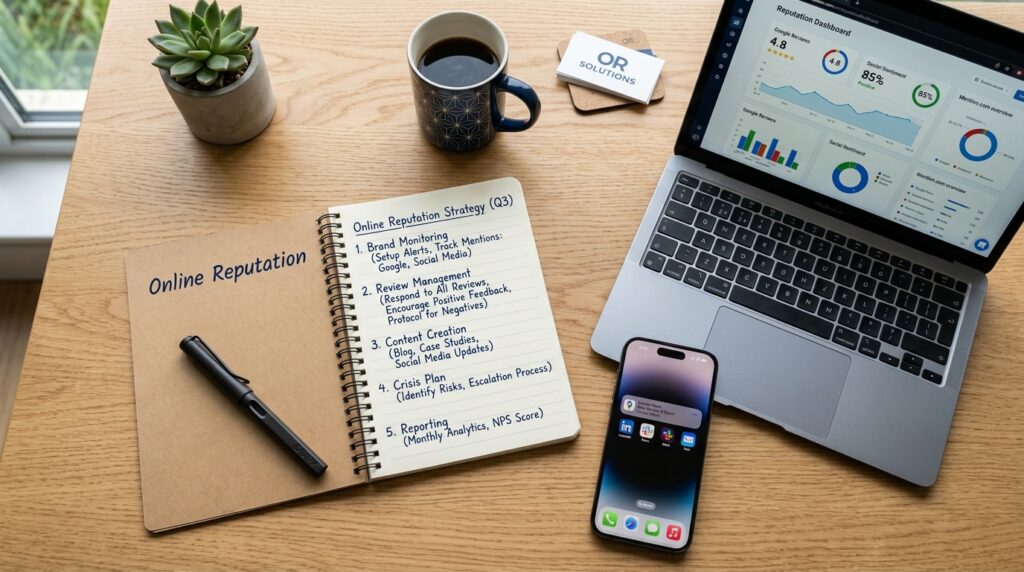
Building a resilient reputation online isn’t just about how you handle individual bad comments. It’s about the cumulative habits you build over time.
Practical expert tips:
- Publish consistently. A steady stream of quality content creates a baseline of positive material that dilutes the impact of individual negative moments.
- Engage regularly with positive commenters. Acknowledging the people who say kind things builds a loyal community that will often organically push back on unfair criticism on your behalf.
- Audit your presence periodically. Search your name or brand name regularly to see what comes up. Early awareness of a growing negative narrative gives you time to address it before it scales.
- Never buy fake reviews or orchestrate fake positive comments. Review manipulation is not only ethically wrong — it’s increasingly regulated, and the reputational damage when it’s exposed is severe.
- Build relationships with your community before you need them. The creators and businesses with the most resilient online reputations have built genuine goodwill over time. When a negative moment happens, that goodwill is a buffer.
- Know your non-negotiables. Decide in advance what you will and won’t engage with. Having a clear personal policy removes the need to make an emotionally charged decision in the heat of the moment.
Response Templates You Can Actually Use
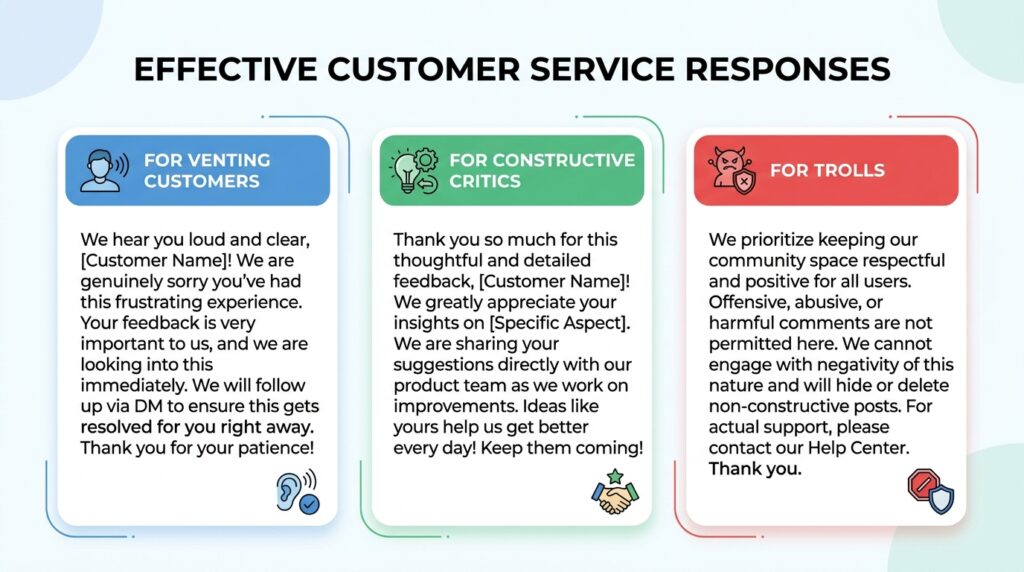
Having a few template frameworks in your back pocket makes it much easier to respond calmly when you’re feeling defensive or frustrated.
For an upset customer:
“I’m sorry to hear about your experience — that’s not the standard we hold ourselves to. I’d genuinely like to make this right. Please reach out to [contact method] and I’ll personally make sure this gets addressed.”
For constructive criticism:
“Thank you for taking the time to share this — it’s genuinely useful feedback. I’m going to look into this seriously and I appreciate you pointing it out.”
For a factual dispute:
“I appreciate the feedback. Here’s a bit more context on what happened: [brief factual clarification]. Happy to discuss further if you’d like to reach out directly.”
For a troll or bad-faith comment:
(No response, or if needed:) “I appreciate engagement but I’m not going to engage further with this particular thread.”
For hate speech or harassment:
(No response — report and block immediately.)
These aren’t scripts to copy word for word. They’re frameworks to help you find the right register when you’re too emotionally activated to think clearly.
FAQs About Dealing with Negative Comments Online
Should I delete negative comments on my social media?
Deleting legitimate criticism is almost always counterproductive. People notice when their comments disappear, often screenshot before they post, and publicly calling out a brand for deleting feedback generates more negative attention than the original comment would have. Delete only content that violates platform rules, contains hate speech or harassment, or is spam. For everything else, respond thoughtfully.
How do I respond to a fake negative review?
First, check whether the review actually violates the platform’s terms (fake reviews from non-customers often do). If so, report it through the platform’s official process. While waiting for a resolution, respond calmly and professionally — explain that you have no record of this experience and invite the person to contact you directly. This protects your reputation with readers even while the review remains visible.
What if a negative comment goes viral?
A viral negative comment or post about you requires a different approach than a typical one-off criticism. Don’t rush to respond publicly until you fully understand what’s being said and why. Get the facts straight internally first. Respond once, clearly, and calmly — then don’t feed it with multiple follow-ups. If the criticism is legitimate, acknowledge it directly. If it’s false, correct the record factually without being defensive. For significant situations, consulting with a public relations professional before responding publicly is often worth the investment.
How do I stop negative comments from affecting my mental health?
Create intentional boundaries with how and when you consume comments. Use platform moderation tools to filter harmful content. Build a support system of people you can debrief with. Consider speaking with a therapist if online negativity is significantly affecting your wellbeing — this is more common than people admit and entirely appropriate to address professionally. And remind yourself regularly: the comments section is not a representative sample of how the world sees you.
Can I take legal action over negative comments online?
In some circumstances, yes. Defamation law covers false statements of fact that damage your reputation — though the bar for proving defamation is high, particularly for public figures. Threats, doxxing, and harassment may rise to criminal levels depending on severity and jurisdiction. For serious situations, consult a media or internet law attorney who can assess your specific case. For most online criticism — even harsh or unfair criticism — legal action is not practical or proportionate, but knowing your options is useful.
Conclusion
Every person with any kind of public presence online will face negative comments. It’s not a question of if, it’s a question of when and how often.
The difference between people who manage it well and people who spiral isn’t toughness or indifference. It’s preparation and practice. They’ve thought about how they want to respond before the criticism arrives. They know which category a comment falls into before they type a reply. They’ve built habits that protect their energy and their reputation simultaneously.
Negative comments don’t define you. Your response does.
Start by deciding in advance what your approach will be. Save this guide somewhere accessible. Build your response framework before you need it. And the next time a harsh comment lands in your notifications, you’ll be ready — not reactive.
Share this guide with someone building their online presence — it might be exactly what they need before their first wave of criticism arrives.