
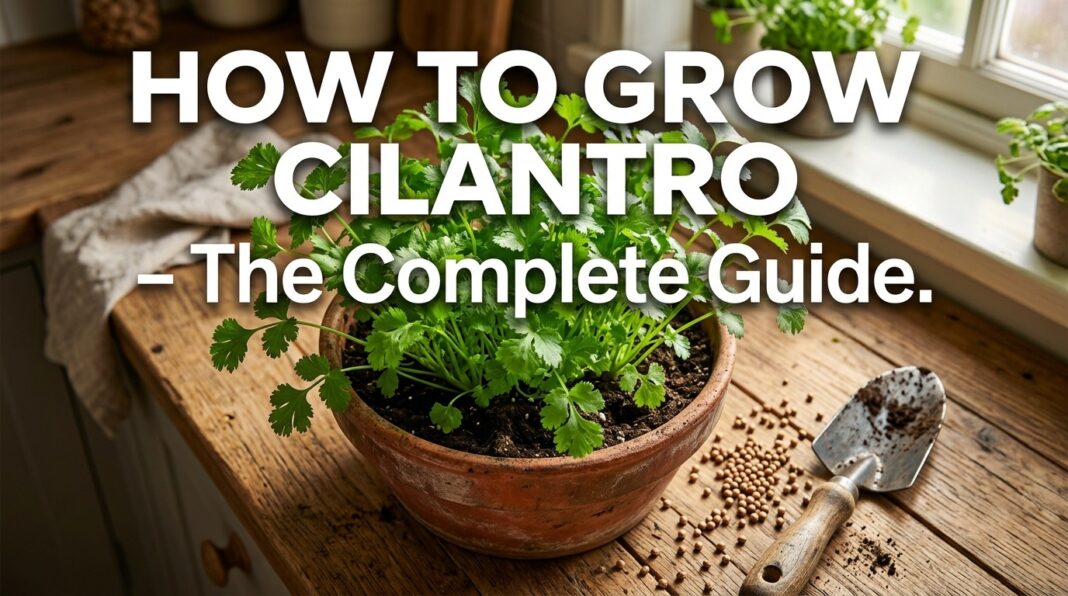

Cilantro is one of those herbs that divides a room — people either love it or can’t stand it. But if you’re here, you’re clearly in the “love it” camp. And honestly, growing it yourself is one of the most satisfying things a home gardener can do. Fresh cilantro from your own pot or garden bed tastes nothing like the limp bunch from a grocery bag. It’s bright, fragrant, and absolutely worth the small effort it takes to grow.
The good news? Cilantro is a fast grower. You can go from seed to harvest in as little as three to four weeks. The slightly tricky part is that it bolts (goes to seed) quickly in heat, which is why most beginner gardeners get frustrated. But once you understand that one quirk, growing cilantro becomes very manageable.
This guide walks you through everything — from planting cilantro from seed, to growing it indoors, in containers, in warm climates, and even in water. No fluff, just what actually works.
What Is Cilantro and Why Grow It at Home?
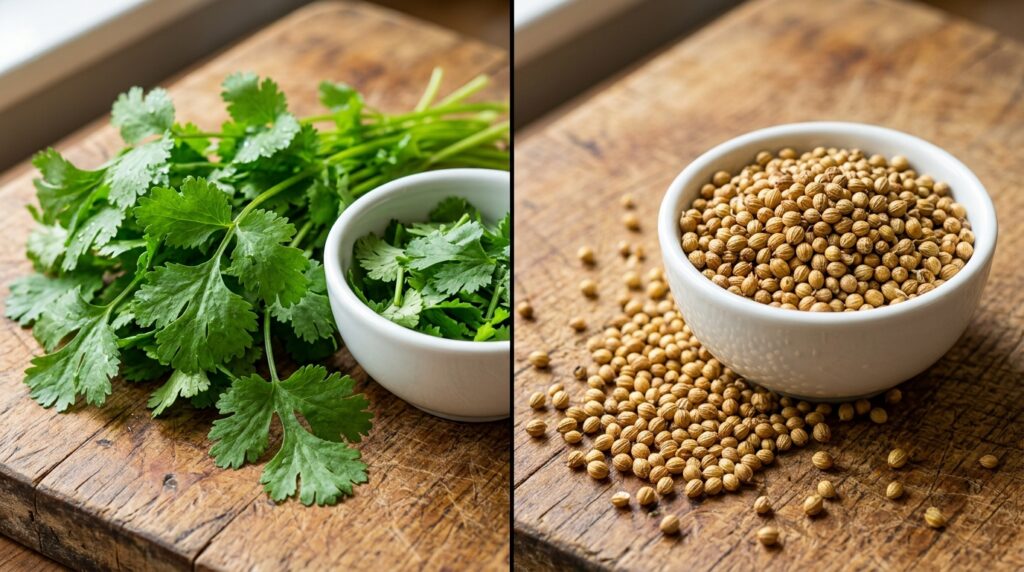
Cilantro (Coriandrum sativum) is a cool-season annual herb used widely in Mexican, Indian, Thai, and Middle Eastern cooking. Every part of the plant is edible — the leaves are called cilantro, while the seeds are known as coriander, a spice used in cooking and baking.
When you grow it yourself, you get access to the full plant. You’re not just getting leaves. You can harvest the stems, let a few plants bolt to collect seeds for replanting or cooking, and even use the roots in certain cuisines.
Growing it at home also means no pesticides, no wilting on store shelves, and no last-minute grocery store runs when a recipe calls for it.
Quick Stats:
| Detail | Info |
|---|---|
| Plant Type | Annual herb |
| Flavor | Bright, citrusy, slightly peppery |
| Full Sun | 4–6 hours minimum |
| Days to Germinate | 7–10 days |
| Days to First Harvest | 21–28 days |
| USDA Hardiness Zones | Best in Zones 3–11 (cool seasons) |
| Edible Parts | Leaves, stems, roots, seeds |
How to Grow Cilantro from Seed
Learning how to grow cilantro from seed is the most cost-effective and rewarding method. Seeds are cheap, widely available, and germinate quickly in the right conditions.
Preparing Cilantro Seeds Before Planting
One tip most beginners miss: cilantro “seeds” are actually seed husks containing two seeds inside. You can gently crush the husk between your fingers before planting to help both seeds germinate faster. This little trick can cut germination time noticeably.
You don’t need to soak cilantro seeds overnight like some other herbs, but lightly crushing them is worthwhile.
Planting Cilantro Seeds Step-by-Step
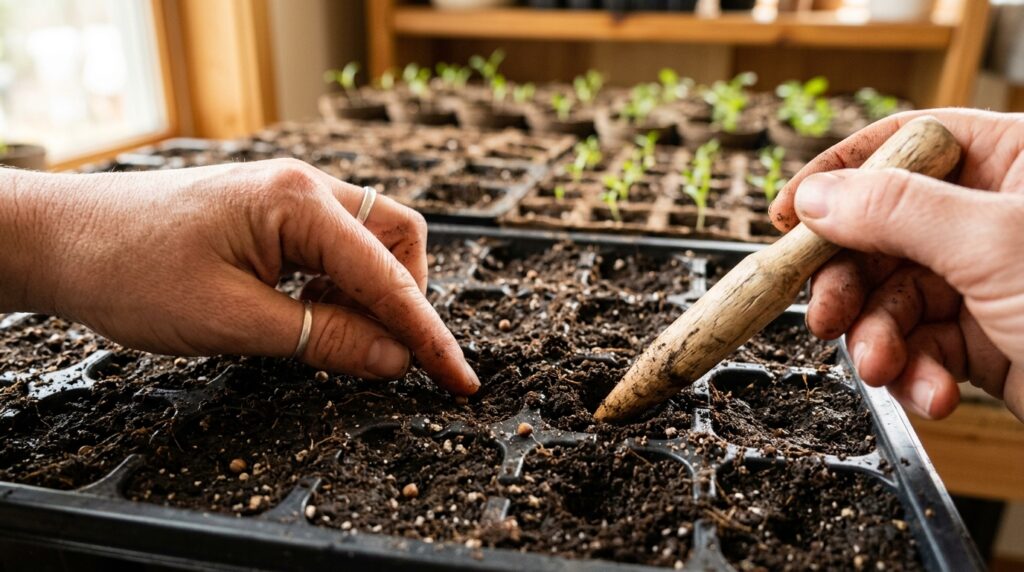
Follow these steps for reliable germination:
- Choose your container or garden bed. Cilantro has a long taproot, so it doesn’t love being transplanted. Plant directly where it will grow — whether that’s a raised bed, in-ground garden, or a deep pot.
- Prepare the soil. Use loose, well-draining soil with a slightly acidic to neutral pH (6.2 to 6.8). Mix in compost for added nutrients.
- Sow the seeds. Press crushed seeds about ¼ inch deep into the soil, spaced roughly 6 inches apart. For rows, keep rows about 12 inches apart.
- Water gently. Use a spray bottle or gentle watering can to moisten the soil without displacing the seeds.
- Keep the soil consistently moist until germination, which usually happens within 7 to 10 days.
- Thin the seedlings once they reach 2 inches tall. Keep the strongest plants, spacing them 6 inches apart to prevent overcrowding.
Succession Planting for Continuous Harvest
Cilantro bolts fast once temperatures rise. The best fix? Stagger your plantings every 2 to 3 weeks. Plant a small batch now, then another batch a few weeks later. This gives you a rolling supply instead of one burst of cilantro that all goes to seed at once.
This method, known as succession planting, is one of the most practical tricks in herb gardening.
How to Grow Cilantro Indoors
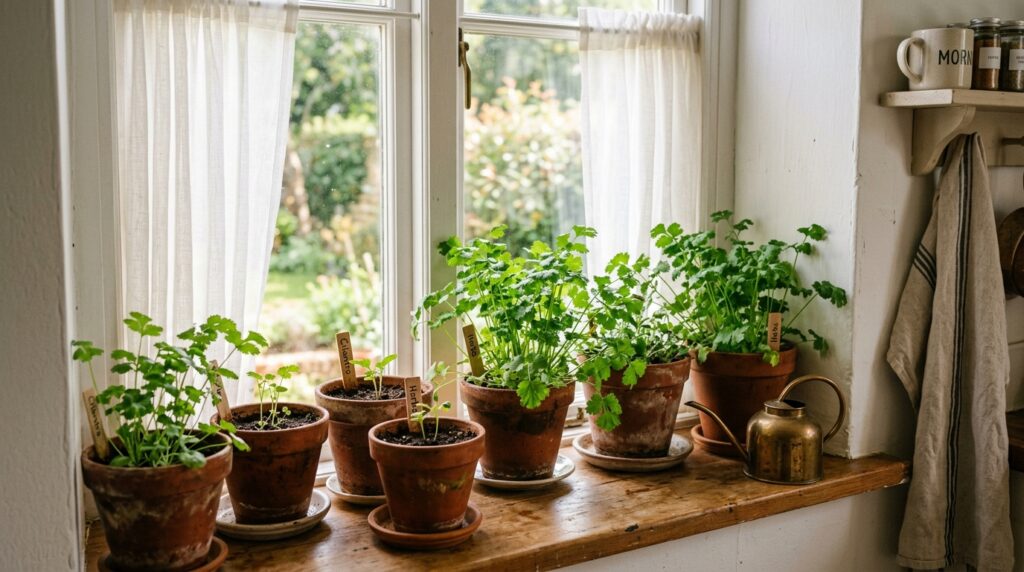
Don’t have outdoor garden space? No problem. Knowing how to grow cilantro indoors is a game-changer for apartment dwellers and city gardeners.
Cilantro can absolutely thrive on a sunny windowsill, under grow lights, or in a bright kitchen corner. Here’s what to keep in mind:
Light Requirements for Indoor Cilantro
Cilantro needs at least 4 to 6 hours of bright, indirect sunlight per day. A south- or west-facing window is usually your best bet. If your space doesn’t get enough natural light, a simple LED grow light set 6 to 12 inches above the plant for 12 to 14 hours a day works very well.
Best Containers for Indoor Cilantro
Depth matters. Use pots that are at least 8 to 12 inches deep to accommodate the taproot. Wide containers let you grow multiple plants together.
Make sure the container has drainage holes. Cilantro sitting in soggy soil will rot at the roots quickly.
Watering Indoor Cilantro
Indoor cilantro dries out faster than outdoor plants because of air circulation and pot size. Check the soil every day or two and water when the top inch feels dry. Don’t let it sit in water, but don’t let it dry out completely either.
A consistent watering routine is the single biggest factor in keeping indoor cilantro healthy.
How to Grow Cilantro in a Pot
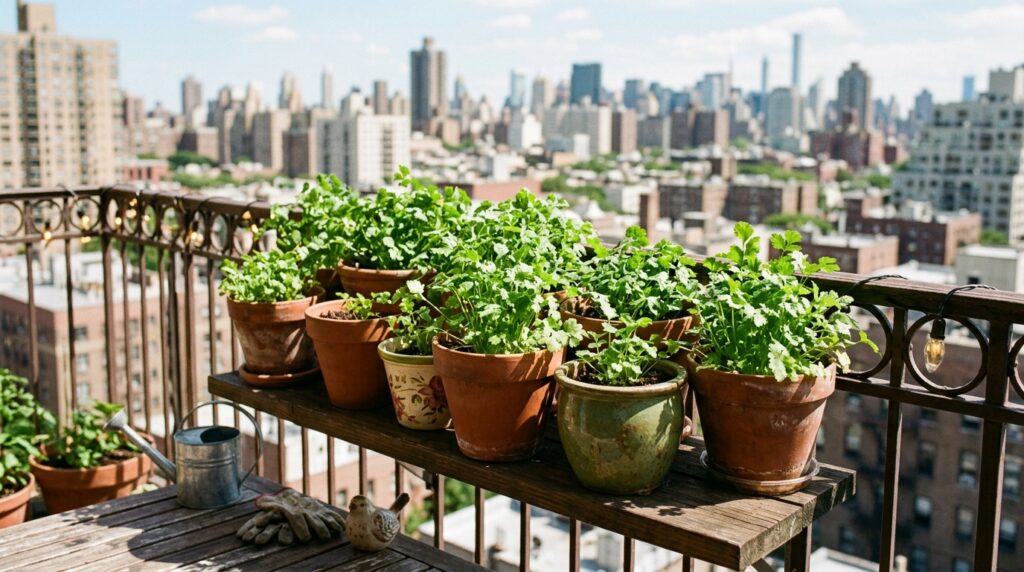
Container growing is perfect for patios, balconies, and small yards. Understanding how to grow cilantro in a pot successfully comes down to three things: pot size, soil quality, and consistent watering.
Choosing the Right Pot
Go deep rather than wide if you can only choose one dimension. A 12-inch deep pot with a 12-inch diameter can support 3 to 4 cilantro plants comfortably.
Terracotta pots are popular because they’re breathable and help prevent root rot. Plastic pots retain moisture longer, which can be helpful in hot, dry climates where you’re watering frequently.
Best Soil Mix for Potted Cilantro
Use a high-quality potting mix rather than garden soil. Garden soil compacts in containers and restricts root growth. Look for a mix designed for herbs or vegetables, ideally with some perlite blended in for drainage.
Add a slow-release granular fertilizer to the soil at planting time. Then fertilize lightly with a balanced liquid fertilizer every 3 to 4 weeks during the growing season.
Sun Placement for Potted Cilantro
One of the best advantages of container growing: you can move the pot. In early spring and fall, place it in full sun. As summer heats up, shift it to a spot with afternoon shade. This keeps the soil cooler and slows the bolting process significantly.
How to Grow Cilantro from Cuttings
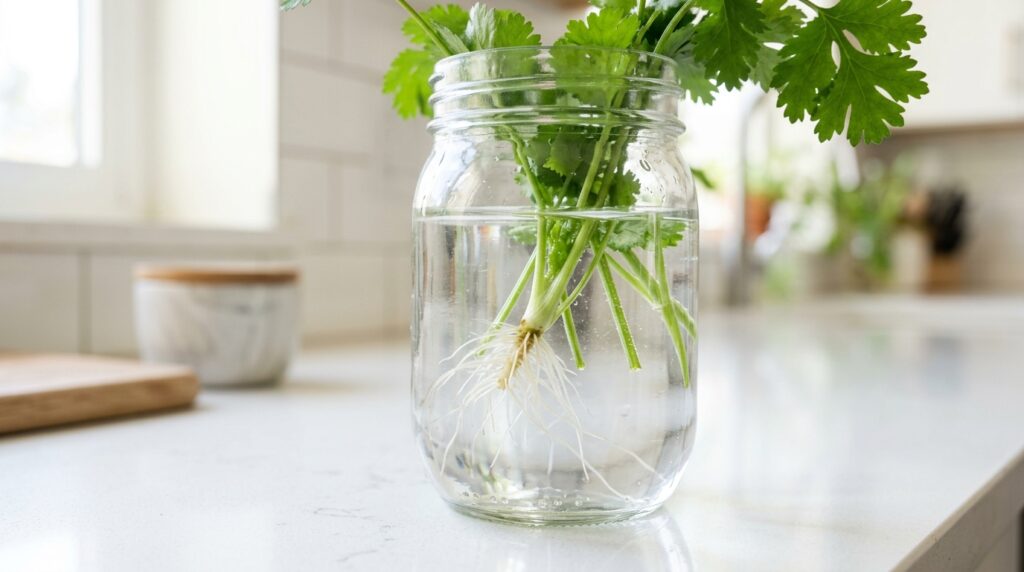
Can you propagate cilantro from cuttings? Yes — and it’s surprisingly easy. Learning how to grow cilantro from cuttings is a smart way to extend your harvest from plants you already have.
How to Grow Cilantro from Cuttings in Water
This method is often called water propagation, and it’s especially satisfying to watch:
- Select a healthy stem that’s at least 4 to 6 inches long and hasn’t started to flower.
- Remove the lower leaves from the bottom 2 inches of the stem so no foliage sits in the water.
- Place the cutting in a clean glass or jar with enough water to cover the bottom 2 inches of the stem.
- Set it in indirect bright light. A windowsill that gets morning sun is ideal — direct afternoon sun can overheat the water and stress the cutting.
- Change the water every 2 to 3 days to prevent bacterial growth.
- Watch for roots to appear within 7 to 14 days.
- Once roots are 1 to 2 inches long, transplant into soil or continue growing in water with diluted liquid fertilizer added.
Keep in mind that water-propagated cilantro tends to be more delicate than seed-grown plants. But it’s a great way to get extra plants quickly from what you already have.
How to Grow Cilantro at Home: Soil, Sun, and Water Basics
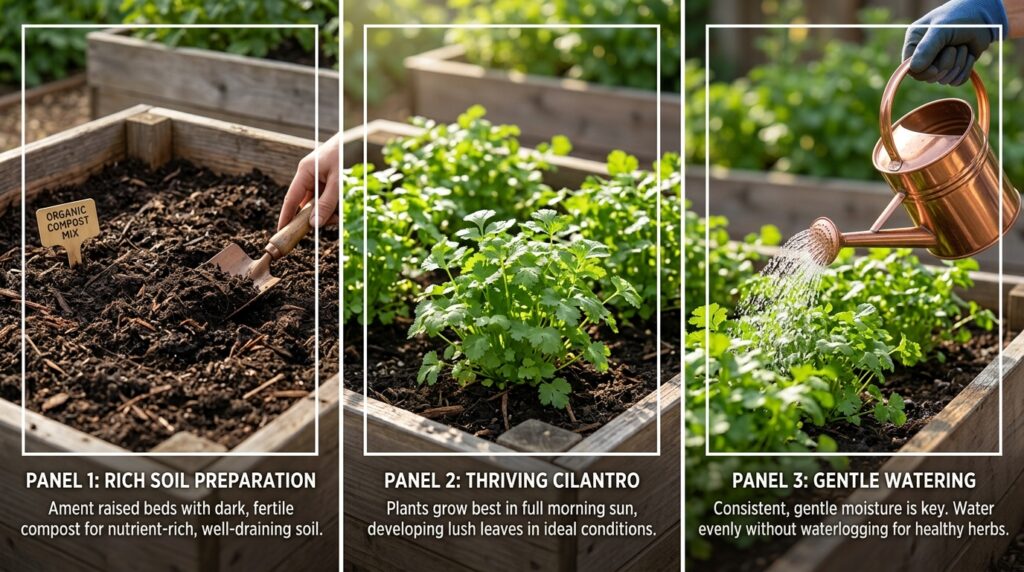
Before diving into climate-specific tips, let’s cover the foundational rules for growing cilantro at home regardless of where you live.
Soil
Cilantro does best in loose, fertile, well-draining soil. Heavy clay soil holds too much water and leads to root rot. Sandy soil drains too fast and dries out quickly.
The ideal setup: loamy garden soil amended with compost. Aim for a pH between 6.2 and 6.8. A simple soil pH test kit from your local garden center can confirm your soil is in range.
Sunlight
Cilantro needs full sun (6 or more hours per day) in cool weather. In warm weather, partial shade — particularly afternoon shade — extends the life of the plant before it bolts.
Water
Keep the soil consistently moist but never waterlogged. Cilantro doesn’t like drought or flooding. Water at the base of the plant rather than over the leaves to reduce the risk of fungal disease.
Fertilizer
A light feeding every 3 to 4 weeks with a balanced fertilizer (like a 10-10-10) keeps growth healthy without pushing the plant to bolt prematurely. Too much nitrogen-rich fertilizer can cause excessive leafy growth and early bolting.
Temperature
The sweet spot for cilantro is 50°F to 85°F (10°C to 29°C). When temperatures consistently exceed 85°F, the plant bolts — it sends up a tall flower stalk and shifts its energy from leaf production to seed production. This doesn’t mean the plant is dead; it just means your leaf harvest is wrapping up. Let it go to seed, collect the seeds, and replant.
How to Grow Cilantro in Florida
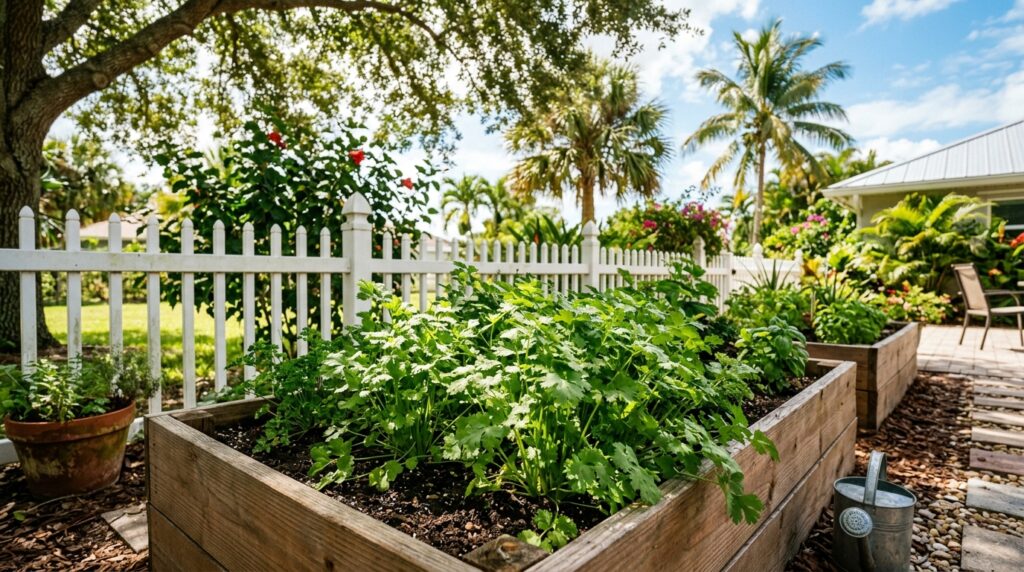
Florida’s heat is cilantro’s biggest challenge. Summers are hot and humid, which causes cilantro to bolt almost immediately. But that doesn’t mean you can’t grow it — it just means timing is everything.
The best times to grow cilantro in Florida are:
- Fall: September through November, when temperatures drop to a more cilantro-friendly range
- Winter: December through February is peak cilantro season in central and south Florida
- Early Spring: March through April before the heat sets in
For those in north Florida, the window is slightly longer than in the southern part of the state. Central and south Florida gardeners should focus on fall and winter planting to get the best results.
Tips for Florida Growers:
- Plant in a spot with afternoon shade to delay bolting
- Water more frequently due to the warm, dry air
- Choose bolt-resistant cilantro varieties like ‘Leisure’ or ‘Calypso’
- Use mulch around the base of plants to retain soil moisture and keep roots cooler
Succession plant every 2 weeks during the cool season to keep a constant supply going.
How to Grow Cilantro in Texas
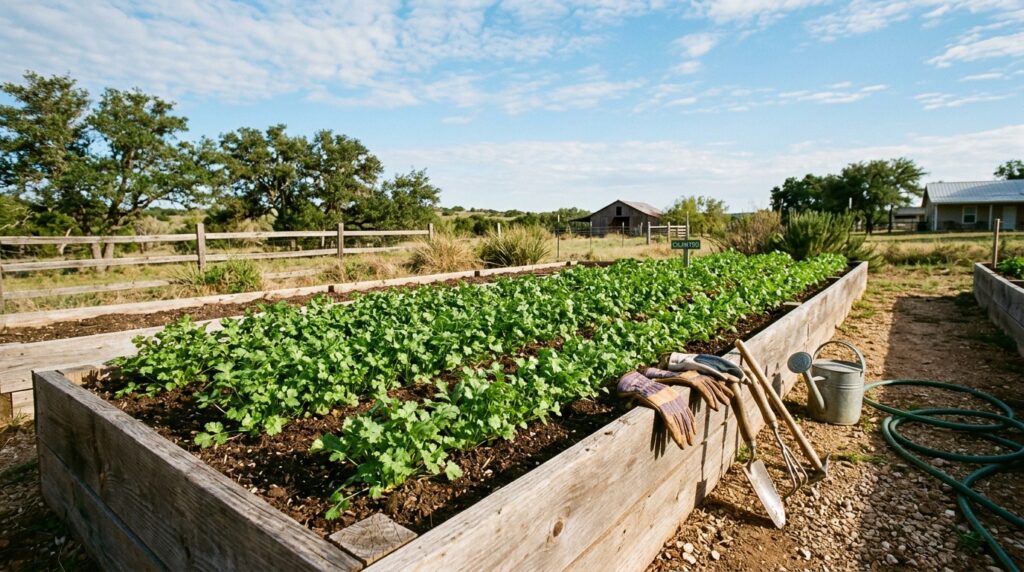
Texas is another state where cilantro growers need to be strategic. The state has wide climate variation — north Texas has cold winters while south Texas barely sees a frost — so your planting schedule depends on where you are.
The Texas A&M AgriLife Extension recommends planting cilantro in early spring and again in early fall. The summer months are generally too hot for cilantro to thrive.
Planting Windows for Texas:
| Region | Best Planting Times |
|---|---|
| North Texas | February–April, September–October |
| Central Texas | February–March, October–November |
| South Texas | November–February |
Texas-Specific Tips:
- Plant in raised beds or containers so you can easily move them when temperatures spike
- Water deeply and consistently — Texas summers dry out soil fast
- Mulch heavily (2 to 3 inches) around plants to conserve moisture
- In extreme heat, use shade cloth rated at 30–40% to keep plants cooler
- Bolt-resistant varieties like ‘Santo’ hold up a bit longer in warm temperatures
How to Grow Cilantro in Water (Hydroponics and Jar Method)
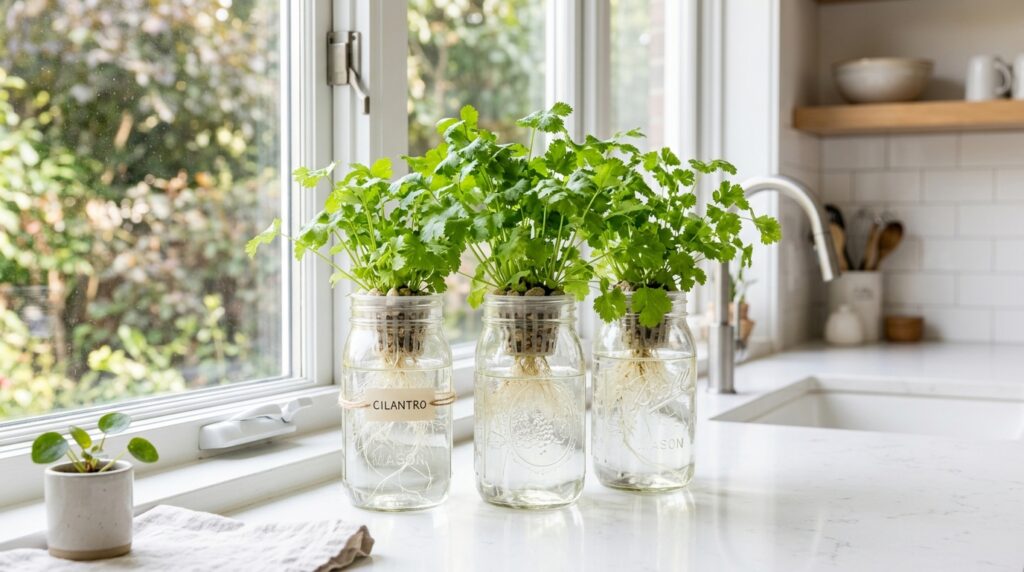
Growing cilantro in water — whether through water propagation or a simple hydroponic setup — is growing in popularity among urban gardeners and those without outdoor space.
Simple Jar Water Growing Method
This method works best as an extension of the cutting method described earlier. Once you have rooted cuttings, you can continue growing them in water by adding a diluted liquid hydroponic nutrient solution to the jar.
Change the nutrient water every 3 to 4 days and keep the jar in bright indirect light.
Hydroponic Cilantro Growing
Hydroponic cilantro can be grown year-round indoors with the right setup. Basic home hydroponic systems like kratky method jars or simple NFT (Nutrient Film Technique) setups work well for cilantro.
Key points for hydroponic cilantro:
- Use a nutrient solution formulated for leafy greens or herbs
- Maintain water temperature between 65°F and 75°F
- Ensure roots have access to air — don’t submerge them completely
- Provide 14 to 16 hours of light per day using LED grow lights
- Expect slightly faster growth than soil-grown cilantro due to constant nutrient access
How to Grow Cilantro from Seed Indoors
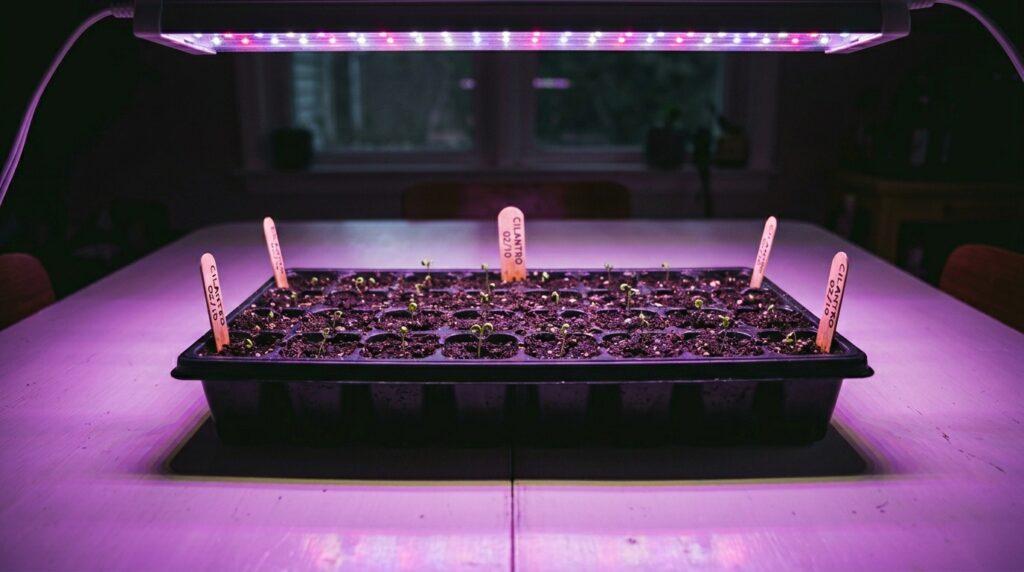
Growing cilantro from seed indoors gives you complete control over your growing environment — temperature, light, and moisture — all year round. It’s one of the most reliable methods for consistent results.
Step-by-Step Indoor Seed Starting
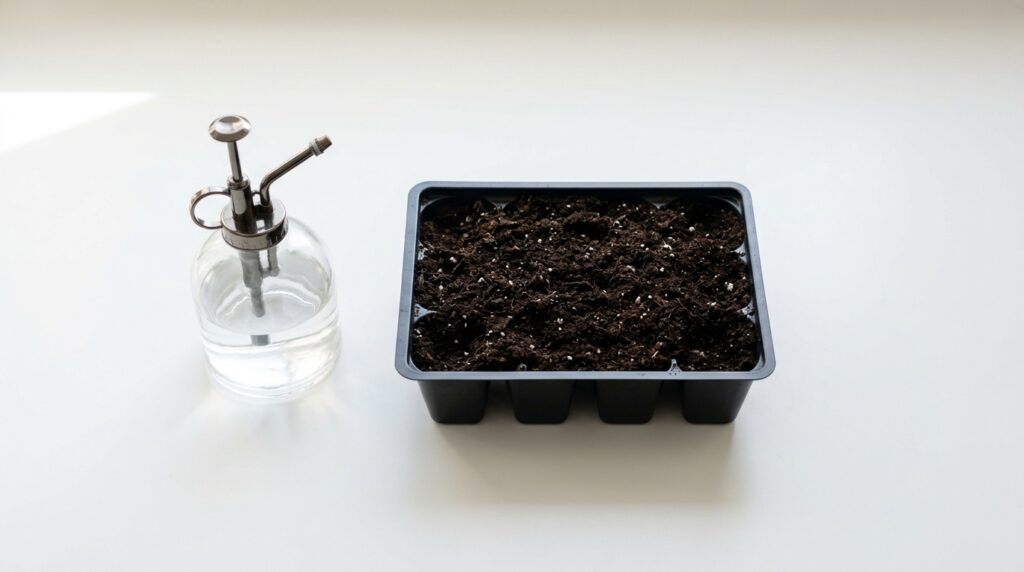
- Fill a seed tray or small pot with a sterile seed-starting mix. Don’t use garden soil — it may carry pathogens and compacts too easily.
- Moisten the mix before planting so the seeds don’t get washed around during watering.
- Crush the cilantro husks gently and press them ¼ inch deep into the mix, spacing 2 to 3 inches apart in the tray.
- Cover lightly with a sprinkle of soil and mist with a spray bottle.
- Cover the tray with a plastic dome or plastic wrap to retain humidity until germination.
- Place under grow lights or in a warm, bright window. The ideal germination temperature is 65°F to 70°F.
- Remove the cover once seedlings emerge, usually within 7 to 10 days.
- Thin seedlings to one per cell once they have their first true leaves.
- Fertilize lightly once every two weeks with a diluted liquid fertilizer once the seedlings have 2 to 3 sets of true leaves.
- Transplant or keep in the tray — if you used a deep enough container initially, you can grow them to harvest size without transplanting.
Common Cilantro Problems and How to Fix Them
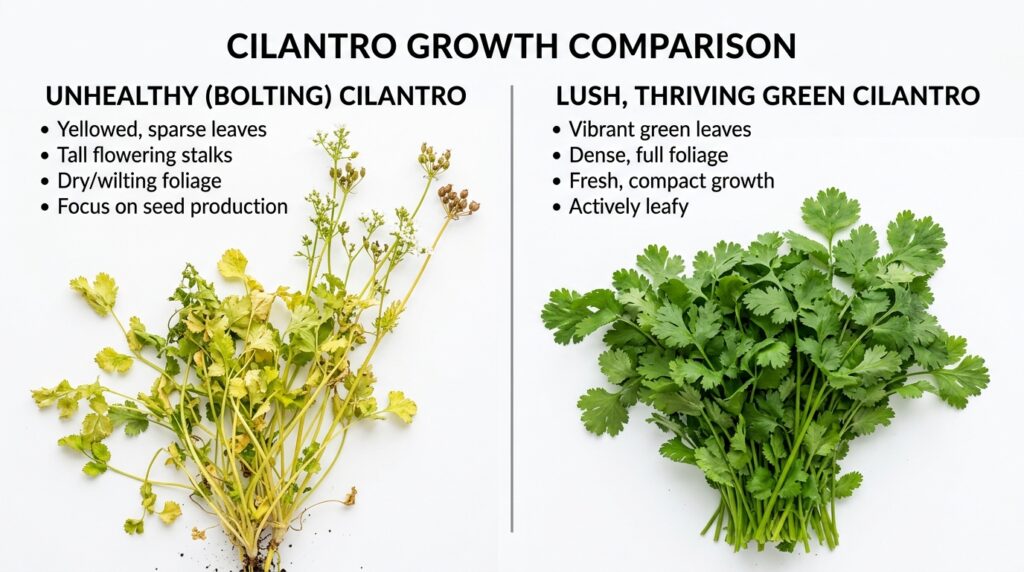
Even simple herbs run into problems. Here are the most common issues and practical solutions:
Cilantro Bolting Too Fast
This is the number one complaint. Bolting happens when temperatures get too high or day length increases. The fix isn’t preventing it — it’s working with it.
- Plant in succession: Every 2 to 3 weeks, start new seeds so you always have young plants producing leaves
- Choose bolt-resistant varieties: ‘Leisure,’ ‘Santo,’ and ‘Calypso’ bolt more slowly than generic varieties
- Provide afternoon shade in warm climates
- Let it bolt: Once it flowers, collect the seeds for coriander or for replanting
Yellow Leaves
Yellow cilantro leaves are usually caused by overwatering, poor drainage, or nitrogen deficiency. Check your watering habits first — stick your finger 1 inch into the soil. If it’s still wet, hold off on watering. If drainage is the issue, repot into a container with better drainage holes. If the soil is fine, a light dose of balanced liquid fertilizer often resolves it.
Wilting
If your cilantro is wilting despite being watered, it could be root rot from overwatering or heat stress. Check the roots — healthy roots are white or light tan. Brown, mushy roots indicate rot. If rot is present, trim affected roots, let the soil dry out, and repot if necessary.
Pests
Common herb pests like aphids, spider mites, and whiteflies occasionally attack cilantro. A strong spray of water can knock them off. Insecticidal soap spray is a safe, effective organic option. Avoid heavy chemical pesticides on herbs you plan to eat.
Harvesting Cilantro the Right Way
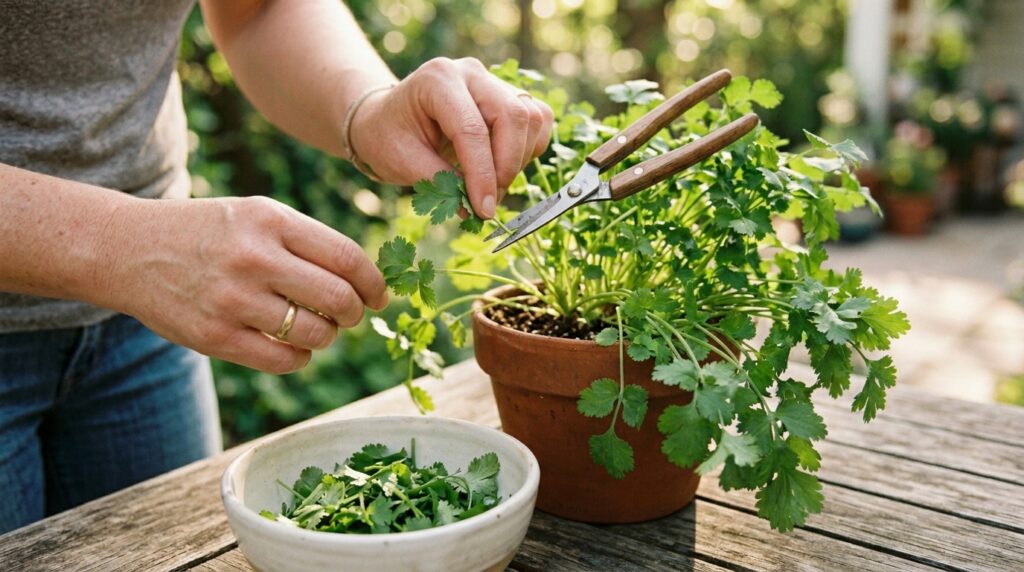
The way you harvest cilantro determines how long the plant keeps producing. Here’s how to do it right:
When to Harvest
Start harvesting when the plant is at least 6 inches tall and has several sets of leaves. Don’t wait too long — the younger and leafier the plant, the more vigorously it regrows after cutting.
How to Harvest
Use clean scissors or your fingers to pinch stems from the outer parts of the plant, cutting just above a leaf node. Never take more than one-third of the plant at a time. This allows it to continue growing and producing new leaves.
Avoid harvesting from the very center or top of the plant — that’s where new growth comes from.
What to Do When It Bolts
When cilantro bolts (sends up a tall flower stalk), the leaves become smaller and more feathery. They still taste good, just slightly more intense. If you want to slow bolting, pinch off the flower buds as they appear. But eventually, let a few plants go to seed.
Those seeds are coriander — great for cooking — and any that fall to the ground often self-seed, giving you a new crop with zero effort.
Expert Tips for Growing Cilantro Successfully
Here are some tips that take cilantro growing from “okay” to excellent:
- Direct sow whenever possible. Cilantro has a long taproot that hates being disturbed. Sow seeds where they’ll live rather than starting in trays and transplanting.
- Water in the morning. Morning watering lets leaves dry during the day, reducing disease risk.
- Mulch the soil surface. A 1 to 2 inch layer of mulch keeps roots cool and soil moisture stable, both of which slow bolting.
- Grow it near tomatoes or spinach. Cilantro is known to attract beneficial insects and can deter aphids from nearby plants.
- Keep the soil pH in check. Slightly acidic to neutral soil (pH 6.2 to 6.8) gives optimal nutrient uptake. Test your soil at least once per season.
- Store harvested cilantro correctly. Trim stems and place in a jar of water like flowers, cover loosely with a bag, and refrigerate. This keeps fresh cilantro usable for up to 2 weeks.
- Freeze for long-term use. Blend washed cilantro with a bit of water or olive oil, pour into ice cube trays, and freeze. Use cubes directly in soups, curries, and sauces.
Cilantro Varieties Worth Growing
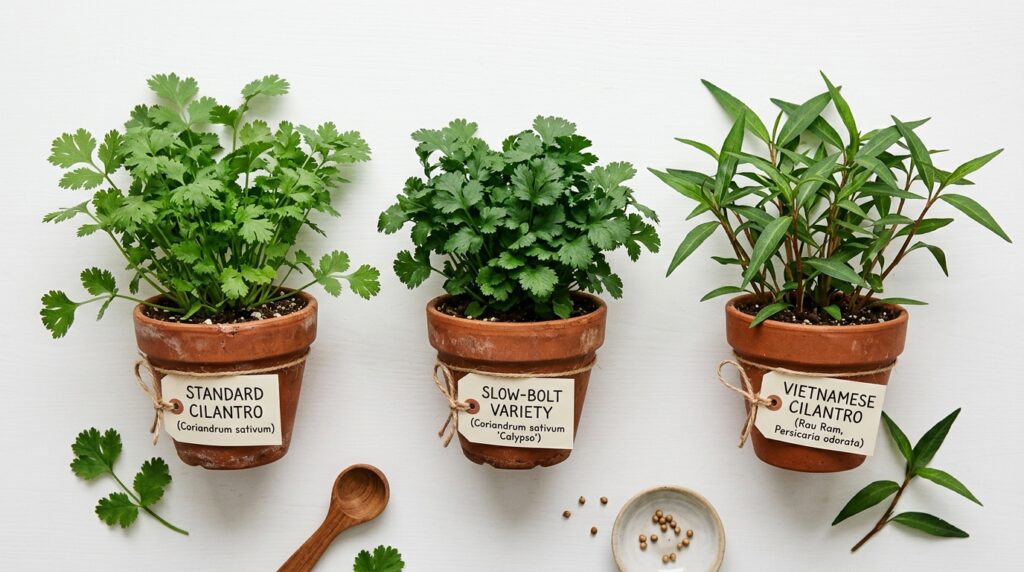
Not all cilantro is the same. Choosing the right variety for your climate and use makes a real difference:
| Variety | Key Feature | Best For |
|---|---|---|
| Santo | Slow to bolt | Warm climates |
| Leisure | Bolt-resistant | Southern and warm regions |
| Calypso | Very slow bolting | Summer gardening |
| Jantar | High essential oil content | Seed/coriander harvesting |
| Vietnamese Cilantro | Heat-tolerant, different flavor | Tropical climates, pots |
Vietnamese cilantro (Persicaria odorata) is technically a different plant but shares a similar flavor. Unlike true cilantro, it thrives in heat and doesn’t bolt — making it an excellent backup option for hot climates like Florida or Texas.
Frequently Asked Questions About Growing Cilantro
How long does it take to grow cilantro?
Cilantro germinates within 7 to 10 days of planting and reaches a harvestable size in about 3 to 4 weeks. The entire life cycle from seed to flowering can happen in 6 to 8 weeks, especially in warm weather. That’s why succession planting is so important.
Can cilantro grow back after cutting?
Yes — if you harvest correctly. Cut stems from the outer parts of the plant and leave the central growth point intact. The plant will regrow and continue producing leaves for several more weeks. If you cut it too severely or harvest from the center, regrowth slows dramatically.
Why does my cilantro keep dying?
The most common reasons cilantro dies are overwatering, insufficient sunlight, or heat stress. Cilantro doesn’t like wet feet — make sure your container drains well and you’re not watering on a strict schedule. Check the soil moisture instead. In hot weather, move potted plants to a shaded afternoon spot.
Is cilantro easy to grow for beginners?
Cilantro is beginner-friendly as long as you understand one thing: it bolts in heat. If you plant it in the right season — spring or fall — it’s genuinely one of the easiest herbs to grow. Start with seeds in a pot on a sunny windowsill and you’ll see results in under two weeks.
Can I grow cilantro year-round indoors?
Yes. With adequate light (either a south-facing window or a good LED grow light) and cool room temperatures (ideally 60°F to 75°F), cilantro can be grown indoors in every season. You’ll need to succession plant every 3 to 4 weeks since individual plants don’t live forever, but a rolling supply is very achievable indoors.
Final Thoughts and Getting Started
Cilantro is one of those herbs that rewards you quickly. You plant it, water it, and within a month you’re clipping fresh leaves to finish a bowl of salsa, garnish a bowl of pho, or fold into a curry that smells amazing. It doesn’t need much. Just the right season, decent soil, reliable moisture, and a little patience.
Whether you’re learning how to grow cilantro from seed indoors, experimenting with water propagation from cuttings, or timing your planting for a warm-climate garden in Florida or Texas, the core principles stay the same. Cool soil, consistent water, good light, and a willingness to replant when it bolts.
Start small. Plant one pot this week. If it bolts, let it. Collect the seeds. Replant. In a few cycles, you’ll have the system figured out and a steady supply of one of the most flavorful herbs you can possibly grow at home.
Your next step? Grab a packet of seeds, pick your spot, and get planting.
Happy growing — your kitchen (and your cooking) will thank you.